


Checklist for High-Protein Vegan Sauce Ingredients
High-protein vegan sauces are a simple way to boost the nutritional value of your meals while keeping them flavorful. They can add 10–15 grams of protein per serving, making them a great addition to plant-based diets. Key ingredients like silken tofu, cashews, nutritional yeast, and white beans provide protein and creamy textures. Combine these bases with roasted vegetables, aromatics like garlic and onions, and seasonings such as soy sauce or smoked paprika to create sauces tailored to your taste.
Here’s a quick summary of what you’ll need:
- Protein bases: Silken tofu (9g protein/serving), cashews (140 calories/serving), or white beans.
- Flavor boosters: Nutritional yeast (8g protein/2 tbsp), soy sauce, miso paste.
- Vegetables: Roasted bell peppers, tomatoes, and mushrooms for depth.
- Aromatics: Garlic, onions, ginger for savory and spicy notes.
- Liquids: Plant milk, vegetable broth, or pasta water for texture control.
- Acids: Lemon juice, vinegar for brightness.
For convenience, you can also enhance your sauces with pre-made options like Taste Flavor Co’s Hot Honey Sriracha or Sweet Honey Mustard. These sauces simplify meal prep and add bold flavors with minimal effort.
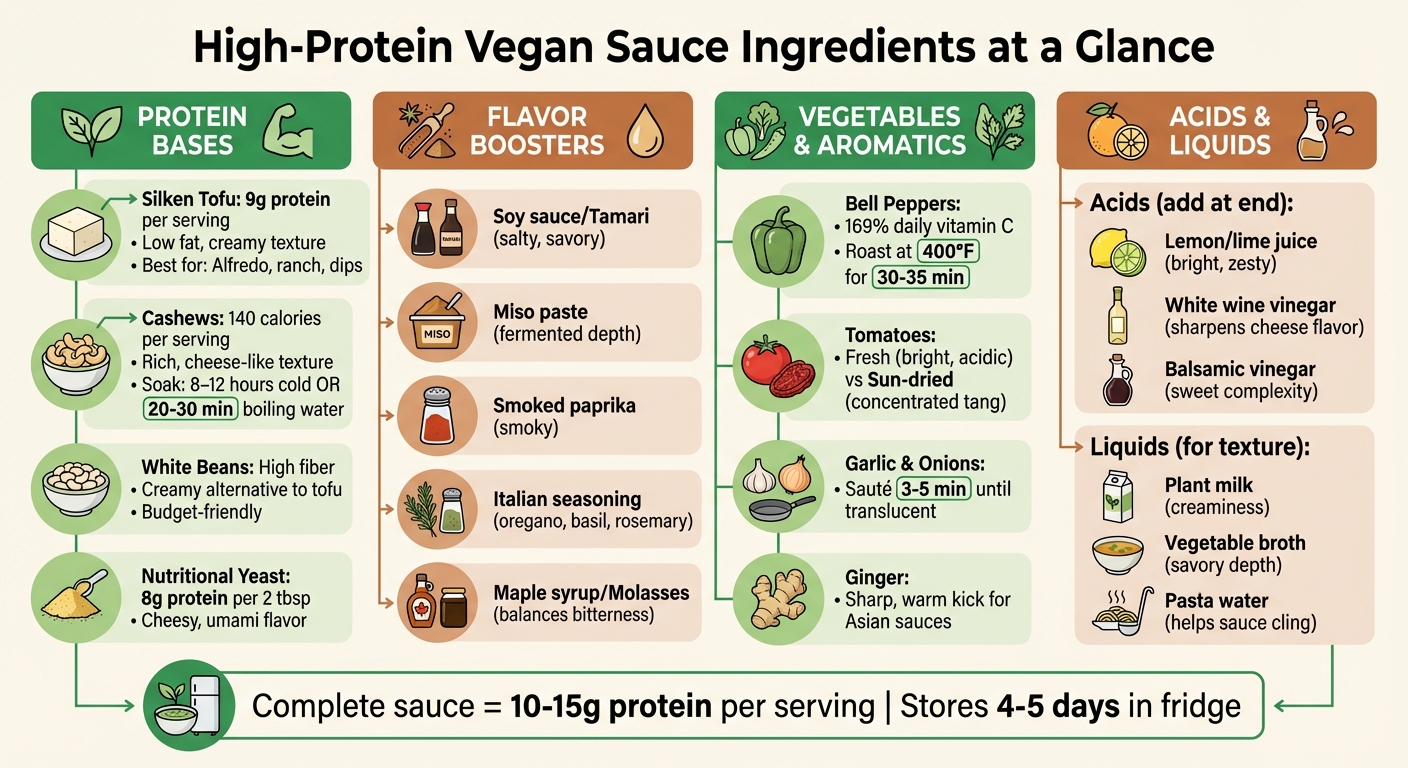
High-Protein Vegan Sauce Ingredients Comparison Chart
Protein-Rich Base Ingredients
Building a high-protein vegan sauce starts with selecting the right base. Silken tofu is a standout choice, offering about 9 grams of protein per serving. It's perfect for creamy sauces like Alfredo, ranch dressings, or dips. Compared to shelf-stable varieties, refrigerated silken tofu has a milder and softer flavor, making it ideal for delicate recipes.
"Silken tofu is low in fat, high in protein... and since it's naturally creamy, we don't need oil, nuts, seeds, or flour for this sauce." - Lori Rasmussen, Founder, My Quiet Kitchen
For a richer texture, cashews are another excellent option. Soak raw cashews in cold water for 8–12 hours, or speed things up by using boiling water for 20–30 minutes. Once drained and rinsed, they blend into a silky, cheese-like consistency. While cashews are higher in calories (about 140 per serving), their creamy texture adds a luxurious element to sauces.
To elevate the flavor, consider nutritional yeast. This ingredient brings cheesy, savory umami notes while contributing around 8 grams of protein per 2 tablespoons. For heartier sauces like Bolognese or chili, Textured Vegetable Protein (TVP) is a game-changer. It delivers a meat-like texture, extra protein, and the convenience of being shelf-stable.
When working with these bases, blending them in a high-speed blender ensures a smooth consistency. For tofu-based sauces, briefly heating them on the stovetop (3–4 minutes) enhances their flavor. If using unflavored protein powder, mix it into a cool liquid first to prevent clumping.
Once your base is ready, you can layer in vegetables and aromatics to create a sauce that's both flavorful and balanced.
sbb-itb-f97e3b5
Vegetables and Aromatics for Depth
Bell Peppers and Tomatoes
Red and orange bell peppers are fantastic for adding natural sweetness and a pop of color to protein-packed sauces. Roasting them at 400°F for about 30–35 minutes gives them a smoky, rich flavor that stovetop cooking just can't replicate. Plus, one serving of bell peppers packs a whopping 169% of your daily vitamin C needs.
When it comes to tomatoes, you’ve got options. Fresh tomatoes bring a bright, acidic note, while sun-dried tomatoes, especially the oil-packed kind, offer a concentrated tanginess and help create a creamy, luscious texture. Want to maximize the health benefits? Cook your tomatoes in olive oil to enhance lycopene absorption.
"I love making pasta sauce by roasting the veggies because I think it gives it more depth of flavor and you just don't get the same vibe from cooking pasta over the stovetop." - Bailey Ruskus, Chef
For an extra layer of flavor, try finishing your sauce with a splash of balsamic vinegar or toss in some kalamata olives to balance the acidity. Once your peppers and tomatoes are in play, it’s time to build on this foundation with some classic aromatics.
Onion, Garlic, and Ginger
Now that you’ve added sweetness and tang, it’s time to lay down a savory base to tie your sauce together.
Onions and garlic are the backbone of most sauces. Sauté them for 3–5 minutes until they’re translucent or just slightly caramelized to add depth and richness. If you’re looking for a sweeter, more mellow garlic flavor, try roasting a whole bulb. It’s simple - just slice off the top to expose the cloves, drizzle with oil, and roast until soft. The roasted garlic easily squeezes out of the skins and adds a buttery, nutty flavor.
"A whole bulb of fresh garlic adds a ton of flavor (it mellows beautifully when roasted)." - Michaela Vais, Recipe Developer
Fresh ginger brings a sharp, warm kick that’s perfect for Asian-inspired sauces. Peel it, mince it finely, and mix it right in. Want to add a hearty texture? Finely chop some mushrooms - like cremini, shiitake, or oyster - or even eggplant, and blend them into your protein base for a satisfying bite.
Seasonings and Liquids
Once your aromatics are ready, it’s time to take things up a notch. This is where spices, acids, and liquids come into play, fine-tuning the flavor and texture of your sauce.
Spices and Umami Ingredients
The right spices can transform a good sauce into an unforgettable one. For a salty, savory boost, soy sauce or tamari are excellent choices. Want to add a hint of fermented depth? Stir in a spoonful of white miso paste.
"Nutritional yeast is the key to achieving the savory, cheesy flavor often enjoyed in dairy-free protein sauce recipes." – Lucian Campan, Author, Pete's Pasta
For a smoky twist, smoked paprika is your go-to. Earthy spices like cumin and turmeric bring warmth and a golden hue, while Italian seasoning blends (think oregano, basil, and rosemary) or fresh herbs like parsley and chives add complexity. If your sauce feels too sharp or bitter, a touch of maple syrup or blackstrap molasses can round out the flavors beautifully. These seasonings create a rich base, setting the stage for the final layers of acidity and liquid.
Acids for Brightness
Acids are the secret weapon for keeping protein-rich sauces light and vibrant. A splash of fresh lemon or lime juice adds a bright, zesty kick, especially in creamy sauces made with cashews or tahini. For vegan cheese sauces, white wine vinegar sharpens the cheesy flavor from nutritional yeast, while balsamic vinegar adds a hint of sweetness and complexity to tomato-based sauces.
"If a dish tastes dull, try adding a splash of acid before adding more salt - it might be the missing flavour element!" – Vu Nguyen, Author
To preserve their delicate flavors, add acids toward the end of cooking. Taste as you go to strike the right balance. If the sauce becomes too tart, a pinch of baking soda or a drizzle of sweetener can help smooth things out.
Liquids for Texture Control
The liquid you choose has a big impact on the sauce’s texture. Unsweetened plant milk (like cashew, soy, or oat) adds creaminess, while vegetable broth thins the sauce and enhances its savory depth. For pasta sauces, a splash of starchy pasta water helps the sauce cling to noodles perfectly.
When working with thick bases like silken tofu or cashews, keep some extra liquid on hand, as these ingredients tend to thicken during blending or cooking. Add liquid gradually until you reach the consistency you’re after. If reheating a sauce that’s thickened in the fridge, a quick whisk with a bit of water or plant milk will make it smooth and silky again.
Substitutions and Where to Buy
Common Ingredient Swaps
Keeping your vegan sauces packed with protein and flavor is easier when you know the right ingredient swaps. For instance, if you're out of silken tofu, you can use puréed white beans like cannellini or navy beans. They provide a similar creaminess while also adding extra fiber. On the other hand, substituting firm tofu for silken will result in a stronger soy flavor and a slightly coarser texture.
Need a replacement for cashews? Try raw sunflower seed kernels - they work well as a 1:1 substitute. Plus, they're more budget-friendly, with sunflower seeds often priced under $2 per pound in bulk, compared to raw cashews, which usually range between $5 and $11 per pound. Just soak them for about 20 minutes before blending. If you’re using silken tofu instead of cashews, be sure to cut back on added water or plant milk, as tofu contains more water naturally. For context, a 12-ounce container of silken tofu offers around 24 grams of protein and only 120 calories, while a cup of cashews packs in roughly 818 calories.
When nutritional yeast isn’t on hand, you can rely on miso paste for that savory, fermented flavor. Soy sauce or tamari also works well to add a salty depth. If your sauce tastes a little bland after using a mild base like silken tofu, try boosting the acidity with a splash of lemon juice or vinegar to bring the flavors to life.
Now that you’ve got the swaps down, let’s talk about where to find these specialty ingredients.
Finding Specialty Ingredients
Knowing where to shop can make all the difference when it comes to sourcing high-quality ingredients for your vegan sauces. Items like TVP (textured vegetable protein) and nutritional yeast are more accessible than you might think. Health food stores such as Whole Foods or local co-ops often have TVP in their bulk bins for less than $2 per pound. You can also find it in the baking or health food sections of many standard grocery stores. For a different spin, check out Indian grocery stores, where TVP is labeled as "soya chunks" and comes in various shapes like strips or large chunks.
Prefer online shopping? Retailers like Amazon, Bob's Red Mill, and Nuts.com are great options. TVP is typically priced around $8.49 per pound, while nutritional yeast runs about $10.49 for an 8-ounce bag. For reference, a quarter cup of dry TVP delivers about 12 grams of protein, and it can be stored indefinitely in an airtight container, making it a pantry staple for vegan cooking.
Using Taste Flavor Co Sauces with Homemade Recipes
Flavor Combinations
Taste Flavor Co sauces are a simple way to elevate high-protein vegan dishes without extra effort. Instead of crafting a sauce from scratch, try blending Hot Honey Sriracha into silken tofu or cashew cream for a spicy aioli or creamy pasta sauce. The sauce’s heat and tanginess perfectly balance the neutral, rich flavors of these protein-packed bases.
For a tangy and creamy dressing or dip, mix Sweet Honey Mustard with blended white beans or tahini. These sauces, with only 10 calories or less per serving, bring intense flavor without derailing your macro goals. For instance, a silken tofu-based sauce with nutritional yeast provides about 8.7 grams of protein per serving. Add a tablespoon of Hot Honey Sriracha, and suddenly, you’ve got a spicy vegan queso - no extra prep needed.
"Sauces are honestly my secret weapon in the kitchen. A good sauce can turn plain veggies, rice, or even leftover pasta into something magical." - Regi Pearce, Author, Nuts and Twigs
These sauces also simplify meal prep, transforming basic proteins and grains into complete, flavorful dishes with minimal effort.
Quick and Easy Meal Enhancement
Taste Flavor Co sauces are more than just toppings - they can completely transform your high-protein vegan meals. Use Hot Honey Sriracha as a marinade for tempeh or extra-firm tofu before sautéing or air-frying. The sauce caramelizes as it cooks, adding layers of flavor and a satisfying protein boost. For pasta, stir any Taste Flavor Co sauce into a cashew-nutritional yeast base to whip up a quick Alfredo or Mac and Cheese-style dish. Thin out thicker sauces with plant milk or reserved pasta water for a smooth, even coating.
Want to take your Buddha bowls to the next level? Whisk these sauces with tahini or peanut butter for a protein-packed dressing. A quarter cup of tahini alone adds about 8 grams of protein. Combine it with Sweet Honey Mustard, and you’ve got a tangy, creamy topping that turns grains and legumes into a satisfying meal. Plus, homemade high-protein sauces typically keep well in the fridge for 4–5 days, making weeknight dinners faster and easier than ever.
Conclusion
Making high-protein vegan sauces is surprisingly simple, relying on staple ingredients you probably already have. The key players? Silken tofu for a creamy, low-fat base, cashews for a rich texture, nutritional yeast to add that savory umami kick, and white beans to pack in extra protein. Combine these with the FASSS method - balancing Fat, Acid, Sweet, Salt, and Seasoning - and you've got a solid starting point.
To take it up a notch, focus on boosting the protein content. For example, swap water for soy milk in a tofu-based sauce or blend tahini into a cashew cream. These small tweaks can push the protein in a single serving to an impressive 25–30 grams. As Nick Chambers explains:
"Protein doesn't have to come from a scoop of powder or a boring chicken breast. When you build it into your sauces, every bite does double duty".
If you're short on time, Taste Flavor Co sauces make it even easier. These sauces can act as the acid or seasoning in your base. For a spicy aioli, blend their Hot Honey Sriracha with silken tofu. Or, for a tangy dressing, mix their Sweet Honey Mustard with white beans.
Adjusting the liquid components lets you fine-tune the consistency to your liking. Most of these sauces store well in the fridge for 4–5 days, giving you plenty of time to enjoy them. With built-in protein and bold flavors, these sauces make every meal both satisfying and nourishing.
FAQs
How can I hit 20–30g protein in one serving of vegan sauce?
To pack 20–30g of protein into a vegan sauce, focus on ingredients that naturally contain a lot of protein. Options like tofu, white beans, cashews, or hemp seeds are excellent choices. These not only boost the protein content but also blend seamlessly into recipes. For instance, you could try a creamy tofu-cashew sauce or a white bean-based Alfredo. Play around with these ingredients to craft a sauce that's both delicious and loaded with protein.
What’s the best base for a creamy sauce with fewer calories?
Silken tofu is an excellent choice for crafting creamy, low-calorie vegan sauces. Its smooth, velvety texture makes it perfect for blending, while also adding a boost of protein without piling on extra calories. Combine it with your favorite spices, herbs, or other ingredients to create a sauce packed with flavor.
How do I fix a vegan sauce that’s too thick, bland, or too tart?
If your sauce feels too thick, you can thin it out by adding a bit of water, plant-based milk, or broth. If the flavor seems bland, try boosting it with extra seasonings, spices, or even a splash of lemon juice or vinegar for some tang. To counteract tartness, add a hint of sweetness - like maple syrup or agave - or stir in something creamy, like cashew cream. Make adjustments slowly and taste as you go.