


How to Replace Sugar in Sauces Without Losing Flavor
Replacing sugar in sauces is easier than you might think, and you don’t have to sacrifice flavor. Here’s the key: sugar does more than sweeten - it balances acidity, adds moisture, enhances texture, and even helps sauces brown and caramelize. To replicate these effects, you need the right substitutes and a few tweaks to your recipes.
Quick Summary:
-
Best Sweeteners:
- Allulose: Mimics sugar’s browning and caramelization. Great for BBQ sauces and glazes.
- Monk Fruit: Clean sweetness, ideal for Asian stir-fry sauces.
- Stevia: Works well in marinades but can taste slightly bitter.
- Fruit Purees: Add sweetness and body, perfect for honey mustard.
- Erythritol Blends: Balanced sweetness for savory-sweet sauces, but watch for graininess.
-
Tips for Success:
- Adjust liquids when using substitutes like honey or maple syrup.
- Add acids (like vinegar or lemon juice) to balance sweetness.
- Use umami-rich ingredients (soy sauce, miso) or warm spices (cinnamon, nutmeg) for depth.
- Test in small batches to fine-tune flavor and consistency.
With these strategies, you can create sauces that are just as tasty as their sugar-filled counterparts while reducing calories and sugar intake. Let’s explore how to make it happen.
How to Make Sweet & Tangy Sugar-Free Keto Barbecue Sauce
sbb-itb-f97e3b5
Why Sugar Matters in Sauces
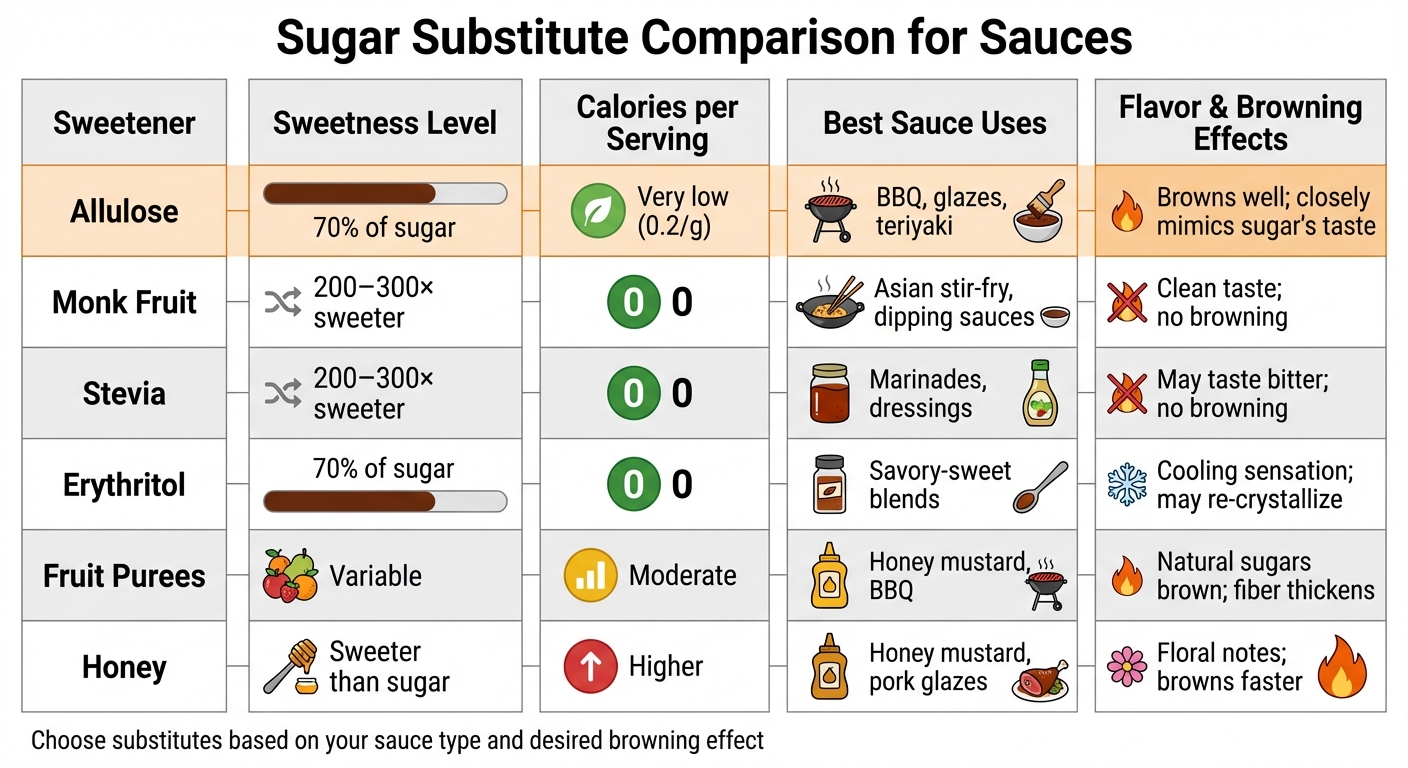
Sugar Substitute Comparison Chart for Sauces
Sugar isn't just about sweetness - it plays a key role in shaping the overall flavor, texture, and appearance of sauces. Whether you're whipping up a BBQ sauce or a teriyaki glaze, sugar is a multitasker that brings everything together. If you're considering swapping it out, it's important to understand exactly what sugar does in your recipes.
For starters, sugar balances flavors. It smooths out the sharp acidity of vinegar and tempers the saltiness of soy sauce, creating a harmonious blend. Beyond taste, sugar contributes to texture by adding moisture and creating that glossy, clingy finish that helps sauces stick to meats.
Then there's the magic of heat. When sugar hits temperatures above 320°F, it caramelizes, forming new, complex compounds that deliver rich, toasty flavors and a deep amber color. Between 285°F and 330°F, the Maillard reaction - where sugars interact with proteins - takes things even further, adding savory depth to meat-based sauces. As Silas, founder of Flavor365, explains:
"The heat breaks down the sucrose molecules, rearranging them into hundreds of new, complex compounds that have that characteristic nutty flavor and deep amber color."
Lastly, sugar enhances visual appeal. It gives sauces that glossy sheen we associate with restaurant-quality glazes. These roles make it clear why choosing the right sugar substitute is so important - each replacement needs to match the specific demands of your sauce.
Sugar Substitute Comparison
Not all sweeteners are created equal. While some mimic sugar's browning and texture, others fall short, potentially leaving you with bitter flavors or grainy textures. Here's a quick breakdown of common substitutes and how they perform:
| Sweetener | Sweetness Level | Calories per Serving | Best Sauce Uses | Flavor & Browning Effects |
|---|---|---|---|---|
| Allulose | 70% of sugar | Very low (0.2/g) | BBQ, glazes, teriyaki | Browns well; closely mimics sugar's taste |
| Monk Fruit | 200–300× sweeter | 0 | Asian stir-fry, dipping sauces | Clean taste; no browning |
| Stevia | 200–300× sweeter | 0 | Marinades, dressings | May taste bitter; no browning |
| Erythritol | 70% of sugar | 0 | Savory-sweet blends | Cooling sensation; may re-crystallize |
| Fruit Purees | Variable | Moderate | Honey mustard, BBQ | Natural sugars brown; fiber thickens |
| Honey | Sweeter than sugar | Higher | Honey mustard, pork glazes | Floral notes; browns faster |
Among these, allulose stands out as one of the few substitutes that browns and caramelizes like sugar, making it a top choice for BBQ sauces and glazes. Monk fruit and stevia are better suited for cold applications or marinades where browning isn't a factor, though stevia can sometimes leave a slightly bitter note. Erythritol, often used in keto-friendly recipes, may re-crystallize when the sauce cools, creating a grainy texture.
Up next, we'll dive into specific strategies for substituting sugar in different types of sauces, so you can craft perfectly balanced flavors every time.
How to Replace Sugar in Sauces
To successfully swap out sugar in your sauces, you’ll need to figure out its role in the recipe, pick the right alternative, and tweak the other ingredients to keep everything balanced.
Determine What Sugar Does in Your Recipe
Start by understanding why sugar is in your sauce in the first place. Is it there for sweetness, to add depth (like the molasses in brown sugar for BBQ sauce), or to balance acidity from ingredients like vinegar or tomatoes? Knowing this will help you maintain the sauce's flavor.
Sugar can also affect texture. For example, brown sugar and molasses create a sticky, syrupy texture that helps sauces cling to food. If your recipe relies on sugar for browning or glazing, you’ll need a substitute that supports the Maillard reaction, like traditional sugars or allulose. Keep in mind that alternatives like stevia or monk fruit won’t help with browning.
Also, sugar controls moisture. Swapping granulated sugar for liquid sweeteners like honey or agave introduces extra liquid, which might require you to cut back on other liquids in the recipe.
Pick the Right Replacement
Once you know sugar’s role, you can choose the best substitute. For a neutral sweetness in lighter sauces, like sweet and sour glazes, white granulated sugar or allulose are good options. For deeper, richer flavors in BBQ or teriyaki sauces, brown sugar, molasses, or maple syrup can provide both sweetness and complexity.
Honey adds a floral brightness, but its flavor can vary widely. If your sauce involves long cooking times or high heat, stick with heat-stable options like allulose or sucralose. Keep in mind that stevia and monk fruit are intensely sweet - 200 to 300 times sweeter than sugar - so you’ll need to use much smaller amounts.
Once you’ve chosen your substitute, you’ll need to adjust the rest of the recipe to make sure it all works together.
Modify Other Ingredients
After picking your sweetener, tweak the other ingredients to get the right consistency and flavor.
If you’re using liquid sweeteners like honey or maple syrup, reduce the other liquids in your recipe by about 1/4 cup for every cup of sweetener added. Since honey is roughly 20% water and usually replaces sugar at about 3/4 the volume, this helps prevent your sauce from becoming too runny.
For high-intensity sweeteners like stevia, which don’t have the bulk of sugar, you might need to add something like applesauce or yogurt to keep the texture consistent. If you’re using granulated substitutes, dissolve them in a simple syrup (equal parts sweetener and water) before mixing them into your sauce to avoid a gritty texture.
Liquid sweeteners like honey and maple syrup also brown faster, so lowering the cooking temperature by about 25°F can help prevent burning. To enhance sweetness without adding more sugar substitute, you can incorporate spices like cinnamon, nutmeg, or star anise. If your sauce ends up too sweet, balance it out with a splash of acid (lemon juice or vinegar), a pinch of salt (like soy sauce or miso), or a bit of heat from chili flakes.
Best Sugar Replacements by Sauce Type
Sugar plays a key role in the texture and flavor of sauces, but there are alternatives that work just as well, depending on the type of sauce you're making. Here's a breakdown of the best sugar substitutes for different sauces.
Allulose for BBQ Sauces and Glazes
Allulose is a great choice for BBQ sauces because it caramelizes and browns like regular sugar. To match the sweetness, use it at a 1⅓:1 ratio (since allulose is about 70% as sweet as sugar). This swap can reduce calories by up to 64% and sugar by 75%. Be mindful - it browns faster than sugar, so start with indirect heat to set the glaze, then use direct heat briefly to create that rich, glossy coating.
If your glaze is too thin, try thickening it with tomato paste, a cornstarch slurry (1 teaspoon per cup), or 1/4 teaspoon of xanthan gum. For extra shine, stir in a teaspoon of butter or neutral oil per 1/2 cup of glaze. Adding a touch of blackstrap molasses or coconut sugar can deepen the flavor.
While allulose shines in high-heat recipes like BBQ sauces, other substitutes work better for different cuisines.
Monk Fruit for Asian Stir-Fry Sauces
Monk fruit is an excellent option for stir-fry sauces. It’s heat-stable and incredibly sweet - 100 to 400 times sweeter than sugar - without a bitter aftertaste. For convenience, use a granulated monk fruit blend (often mixed with erythritol) that measures 1:1 like sugar. If you're using pure monk fruit powder, start with 1/3 cup to replace 1 cup of sugar and adjust as needed. Its clean sweetness pairs well with flavors like ginger, garlic, and soy sauce.
"For some folks who don't like the taste or aftertaste of stevia as a sugar substitute, monk fruit products become their go-to."
- Amy Crum, MS, RD, LD, Nutritional Weight & Wellness
Since monk fruit doesn’t brown, you may need to add ingredients like soy sauce or dark sesame oil to enhance the sauce’s color.
Stevia for Teriyaki Marinades
Stevia works well in liquid marinades like teriyaki. It’s up to 300 times sweeter than sugar, so you’ll only need about 1 teaspoon of stevia extract to replace 1 cup of sugar. To balance its lack of bulk, mix in applesauce. If you want a browned finish, a small amount of honey or molasses can help. The acidity and umami from soy sauce and pineapple juice also mask any bitter notes from stevia, creating a well-rounded flavor.
Fruit Purees for Sweet Honey Mustard
Fruit purees, like applesauce, are a natural choice for sweet honey mustard sauces. They add sweetness and body, replacing the volume and moisture that sugar provides. Combine 1 teaspoon of stevia extract with applesauce to replace 1 cup of sugar. Adjust other liquids in the recipe to maintain the right consistency. For added depth, a dash of vanilla or a pinch of salt can mimic sugar’s complexity.
A great example is Taste Flavor Co’s Sweet Honey Mustard, which achieves a classic sweet-tangy balance with only 10 calories per serving.
Erythritol Blends for Savory-Sweet Sauces
Erythritol blends are ideal for savory-sweet sauces where you want balanced sweetness without the heavy caramelization of sugar. These blends work well in recipes like Spicy Garlic Parm or Hot Honey Sriracha, enhancing the flavors without overpowering them. Pure erythritol can sometimes leave a cooling sensation or re-crystallize in cold sauces, but blends often include other sweeteners to improve texture.
For cold sauces or dressings, dissolve the erythritol blend in a simple syrup (equal parts sweetener and water) before adding it to avoid any grittiness. While erythritol blends don’t brown well, they’re perfect for sauces that need a balance of heat, umami, and sweetness without added calories.
How to Keep Flavor Balanced with Sugar Alternatives
Swapping out sugar in sauces can sometimes leave the flavors feeling flat. The trick to maintaining a delicious and well-rounded taste is layering complementary flavors to create complexity. Here’s how to keep your sauces flavorful and balanced.
Use Acids to Brighten Flavors
After selecting your sugar substitute and adjusting the other ingredients, focus on balancing the sweetness with acidic highlights. Acids such as lemon juice, lime juice, apple cider vinegar, or red wine vinegar can cut through sweetness and add brightness to the overall flavor profile.
For example, adding a splash of apple cider vinegar to BBQ sauce can bring out deeper flavors. Start small - just a teaspoon or so - and taste as you go. If the sauce ends up too tangy, you can neutralize the acidity with a tiny pinch of baking soda.
Incorporate Spices and Umami Elements
Savory, umami-packed ingredients are a great way to balance sweetness. Soy sauce, miso paste, fish sauce, or Worcestershire sauce can add depth and complexity. Meanwhile, warm spices like cinnamon, nutmeg, allspice, or star anise can enhance the perception of sweetness through their aromatic qualities, allowing you to use less sweetener overall.
If you're dealing with a bitter aftertaste from stevia or another sugar substitute, a pinch of cayenne or red pepper flakes can provide a contrasting kick that offsets any lingering bitterness.
Experiment with Small Batches
When working with sugar substitutes, always test your recipes in small batches first. These alternatives don’t behave exactly like sugar, so experimenting with smaller quantities lets you fine-tune the balance of sweetener, acids, and spices without wasting ingredients.
Add balancing elements gradually - try a teaspoon of vinegar, a pinch of spice, or a tablespoon of soy sauce - tasting after each addition. This method helps avoid over-correcting and ensures you achieve the right balance. Once you’ve nailed the flavor, you can confidently scale up your recipe, knowing it will turn out just as delicious. These small adjustments are key to creating sauces that taste just as rich and satisfying as their sugar-sweetened counterparts.
Conclusion
Swapping out sugar in sauces doesn’t mean sacrificing flavor - it’s all about finding substitutes that replicate sugar’s key functions: sweetening, browning, adding moisture, and contributing to texture. For instance, allulose works great in BBQ sauces and glazes, monk fruit pairs well with Asian stir-fries, stevia enhances teriyaki marinades, fruit purees bring depth to sweet honey mustard, and erythritol blends strike the perfect balance in savory-sweet recipes.
To keep the flavor profile intact, balance sweetness with acids like lemon juice or vinegar and include umami-rich ingredients like soy sauce. Adding warm spices, such as cinnamon or nutmeg, can also naturally enhance sweetness without piling on calories. As registered dietitian Leslie Bonci explains:
"A calorie of sugar is a calorie of sugar... some contain trace nutrients and some taste sweeter than table sugar, which means you may use less which saves calories."
When experimenting, start with small batches and adjust liquids to maintain the sauce’s consistency. This method allows you to fine-tune your recipe while using low-calorie sweeteners to achieve a gourmet-quality sauce without the extra calories.
If you’re looking for convenience, brands like Taste Flavor Co offer pre-made, low-calorie options. Their Cherry Smoked BBQ, Sweet Honey Mustard, and Sesame Ginger Teriyaki sauces are keto-friendly, vegan, and pack bold flavors - all with just 10 calories or less per serving.
With the right substitutes and thoughtful adjustments, you can enjoy sauces that are every bit as satisfying as their sugar-heavy counterparts, all while staying on track with your health goals.
FAQs
Which sugar substitute browns best in sauces?
Allulose stands out as an excellent sugar substitute for achieving browning in sauces. It closely replicates sugar's ability to add color and a glossy finish, while also providing a taste that's strikingly similar to sugar. Unlike many other sweeteners, it doesn't carry the bitterness often associated with alternatives, making it a top choice for preserving both the flavor and visual appeal of your sauces.
How do I prevent grainy texture with sugar alternatives?
To keep your sauces smooth when using sugar alternatives, add the sweetener slowly, tasting as you adjust the flavor. Liquid sweeteners such as honey, agave nectar, or simple syrup blend seamlessly, reducing the risk of grainy textures. If you're working with natural options like stevia or monk fruit, try blending or gently heating them to help them dissolve completely. Make sure the sweetener is fully mixed before combining it with other ingredients to achieve the best consistency.
How can I fix a sauce that tastes too sweet or too bitter?
To tone down an overly sweet sauce, try adding something acidic like vinegar or lemon juice. A pinch of salt or a hint of bitterness can also help even out the flavor. On the flip side, if your sauce is too bitter, a little sweetness - such as sugar or honey - or an ingredient packed with umami can work wonders. Make adjustments slowly to ensure you balance the flavors without overwhelming the dish.