


Low-Calorie Sauce Hacks for Fat Loss
Sauces can make meals tastier, but they often hide extra calories that can disrupt your fat loss goals. A few tablespoons of common condiments like BBQ sauce, ranch dressing, or mayonnaise can add 100+ calories without you realizing it. The good news? You can enjoy flavorful meals without the calorie overload by making smarter ingredient swaps or trying low-calorie alternatives.
Here are 10 practical tips to cut calories from your sauces:
- Swap heavy cream for Greek yogurt: Save up to 80 calories per tablespoon and add protein.
- Thicken with vegetable purees: Use cauliflower, carrots, or spinach for creamy sauces with fewer calories.
- Dilute store-bought sauces: Mix with broth or vinegar to reduce calorie density.
- Make light pesto: Replace basil with spinach and Parmesan with nutritional yeast.
- Use mustard or hot sauce: Add bold flavor with almost zero calories.
- Flavor with herbs and citrus: Skip sugar and oil by using lemon juice, zest, and fresh herbs.
- Switch to powdered peanut butter: Get peanut flavor with 60% fewer calories.
- DIY BBQ sauce: Use tomato paste and spices for a low-calorie alternative.
- Try Taste Flavor Co sauces: Pre-made options with just 5–15 calories per serving.
- Thicken with cornstarch or xanthan gum: Achieve creamy textures without extra fat.
These small changes can help you enjoy delicious meals while staying on track with your fat loss goals. No need to sacrifice taste - just tweak your recipes and condiments for fewer calories and more flavor.
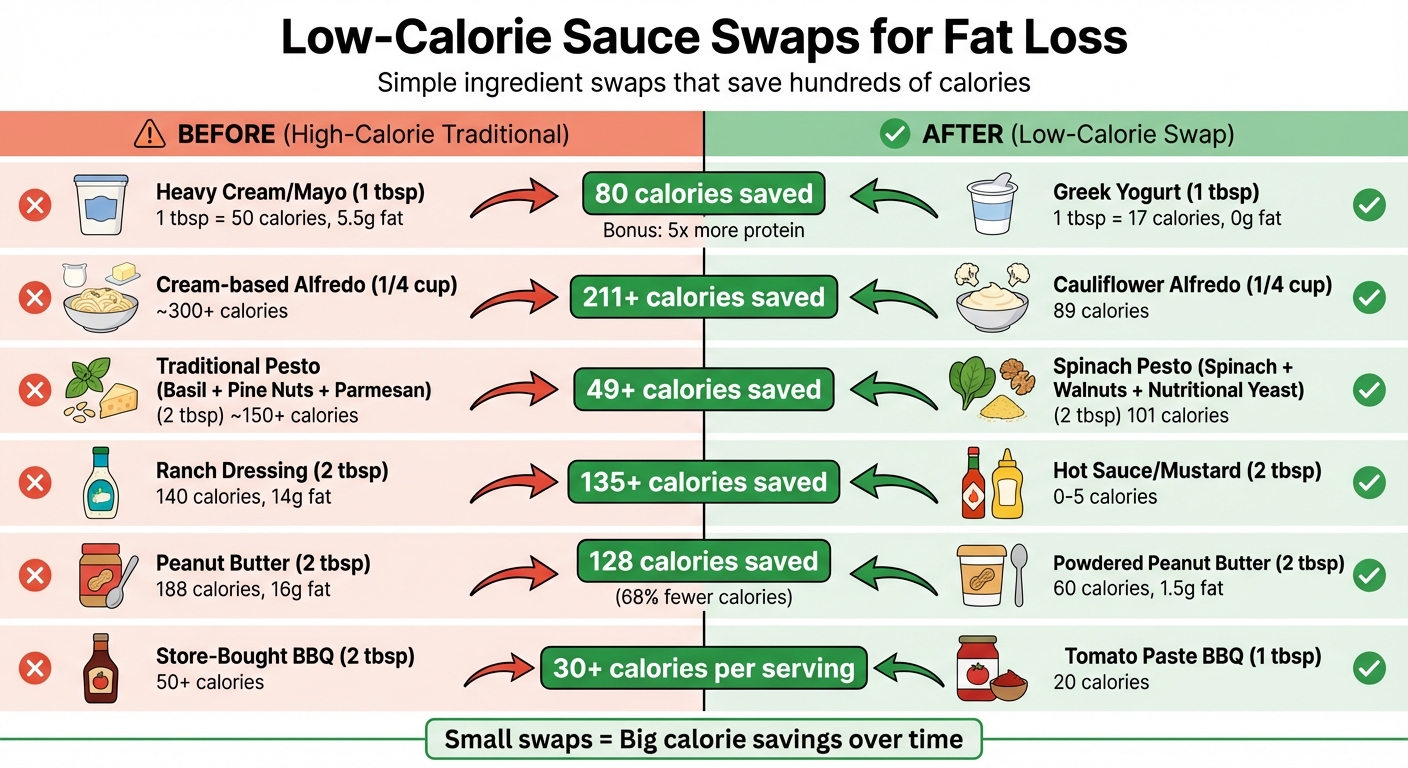
Calorie Comparison: Traditional vs Low-Calorie Sauce Swaps
1. Replace Heavy Cream with Greek Yogurt
Swapping heavy cream for Greek yogurt is a simple way to lighten up recipes while keeping that creamy texture. Replacing just one tablespoon of mayonnaise with Greek yogurt can save about 80 calories. Considering many recipes call for a cup or more of mayo or sour cream, the calorie savings can be substantial.
But it's not just about cutting calories - Greek yogurt also adds more nutrition. It’s packed with protein, offering five times more protein than sour cream. This means you're not just reducing calories; you're also adding nutrients that help keep you satisfied and support muscle maintenance during weight loss. To make the switch, use a 1:1 ratio to replace sour cream or mayo in any recipe. For example, you can whip up a quick ranch dressing by combining 1 cup of plain Greek yogurt with 1 tablespoon of lemon juice and 1 teaspoon each of dried dill, garlic powder, and onion powder.
If your sauce feels too thick, you can thin it out by adding water or lemon juice a tablespoon at a time until it reaches the consistency you want. For cold sauces like dips or dressings, adding a small amount of olive oil can help emulsify the mixture and prevent it from separating in the fridge. If it does separate, just give it a quick stir before serving.
For hot dishes, it’s best to add Greek yogurt at the end of cooking or off the heat to avoid curdling. Using 2% or whole milk Greek yogurt instead of nonfat can also help prevent separation. This swap works wonderfully on baked potatoes, roasted veggies, or as a creamy base for pasta sauces.
sbb-itb-f97e3b5
2. Use Vegetable Purees for Thickness and Flavor
Pureed vegetables are a fantastic way to thicken sauces without relying on cream or butter. Cauliflower is especially handy because it adds body to sauces while keeping the flavor neutral.
For example, a cauliflower-based Alfredo sauce contains just 89 calories per 1/4 cup serving and only 3g of carbs. To make it, boil cauliflower florets in water or stock until tender, then blend them with a splash of reduced-fat milk or broth until smooth. Once blended, simmer the mixture for 3–4 minutes to help it thicken. For more flavor without extra salt, cook the cauliflower in vegetable stock and use some of that liquid when blending.
Other vegetables can add distinct flavors while keeping calories in check. Roasted red peppers deliver a bold, smoky taste when roasted at 425°F until soft and slightly charred. Carrots, on the other hand, bring a natural sweetness to sauces. Leafy greens like spinach or kale are perfect for creating vibrant, nutrient-packed green sauces. If your puree ends up too thin, simply add more blended vegetables or a small pinch of cornstarch to get the right texture.
For the liquid base, stick to broth, water, or vinegar instead of oils or dairy. An immersion blender makes the process quick and easy, and you can always adjust the consistency with extra broth. Adding fresh herbs like thyme, oregano, or dill is a simple way to enhance flavor without increasing calories. This method lets you create sauces that are full of flavor and texture while staying aligned with your fat loss goals.
3. Dilute Store-Bought Sauces with Broth or Vinegar
If you're looking for a way to make store-bought sauces a bit healthier, try diluting them with broth or vinegar. This simple trick not only reduces calories but also stretches the sauce further without adding extra fat or sugar.
Take ranch dressing as an example: just 2 tablespoons pack in 140 calories and 14 grams of fat. By adding 1–2 tablespoons of red wine vinegar to a 16-ounce bottle, you can lower the calorie density while giving it a tangy twist.
Different sauces react differently to dilution, so it's worth experimenting. Here are a few ideas:
- Creamy dressings (like ranch or Caesar): Stir in red wine vinegar for a tangy kick.
- Asian-style sauces (like peanut or teriyaki): Add about 1/2 teaspoon of rice vinegar to enhance brightness.
- BBQ sauces: Use apple cider vinegar to balance out the sweetness.
- Veggie-based sauces: Thin with vegetable broth to keep the savory flavors intact.
Start with small amounts, mix well, and taste as you go until you find the perfect consistency. This approach works especially well with thicker sauces, helping them coat your dishes more evenly without clumping.
4. Make Low-Calorie Pesto with Spinach and Nutritional Yeast
Looking to give classic pesto a lighter twist? Swapping out a few traditional ingredients can make a big difference in cutting calories.
Traditional pesto is heavy on calories, but you can make a leaner version by switching basil for baby spinach and Parmesan for nutritional yeast. This swap keeps the savory, cheesy flavor while bringing the calorie count of a 2-tablespoon serving down to around 101 calories.
For the nuts, consider using walnuts or pecans instead of pine nuts. These alternatives not only add a smooth texture but also provide heart-healthy omega-3s. Toasting the nuts for 4–5 minutes enhances their flavor by releasing natural oils and reducing bitterness.
To cut calories even more, reduce the olive oil. Replace half the oil with water, or mix in creamy ingredients like ripe avocado or sweet green peas.
Finally, brighten the flavor with fresh lemon juice and zest. Store your pesto in a sealed jar for up to a week, and add a thin layer of olive oil on top to keep it fresh and prevent browning.
5. Add Mustard or Hot Sauce for Zero-Calorie Flavor
When it comes to adding bold flavor without piling on calories, mustard and hot sauce are unbeatable. These options bring zest and spice to your meals with almost no caloric impact - ranging from 0 to just 5 calories per serving.
Mustard offers a variety of flavors to suit different dishes. Yellow mustard is a classic choice for sandwiches and dressings, while Dijon and spicy brown mustard add a sharper, more complex flavor, perfect for marinades and glazes. For a heartier texture and bold taste, stone-ground mustard works wonders as a coating for grilled meats.
For example, replacing 2 tablespoons of ranch dressing (140 calories and 14g of fat) with hot sauce can significantly reduce your caloric intake, helping you maintain your calorie deficit. Devon Price, RD/LD at JourneyLite, highlights that these small changes in condiments can have a meaningful impact.
Try mixing yellow mustard with lemon juice and fresh herbs to create a zero-oil dressing, or toss baked cauliflower in buffalo sauce for a flavorful, low-calorie snack. Just be mindful of sodium content when choosing your condiments.
6. Use Fresh Herbs and Citrus Instead of Sugar or Oil
Using fresh ingredients like herbs and citrus can completely change the flavor of your sauces - without piling on extra calories. Citrus juice brings a bright, tangy acidity that can take the place of added sugars, while herbs such as cilantro, parsley, and oregano add layers of flavor without contributing to your calorie count. These natural ingredients make it easy to create bold, low-calorie recipes.
Take a low-oil chimichurri as an example. Combine cilantro, parsley, shallots, red wine vinegar, orange juice, oregano, lemon zest, and garlic. To keep it light, use just 2 tablespoons of olive oil for a full cup of sauce. The citrus juice not only adds flavor but also provides the liquid base that would otherwise require more oil.
Don’t forget the zest! Lemon or lime zest can pack a punch of flavor without adding calories. Mix it with the juice to create a more layered taste, and let the sauce rest for about 30 minutes to allow the flavors to blend perfectly.
For versatile pairings, try combining orange juice and lemon zest with herbs like cilantro, parsley, and oregano for grilled steak or salmon. Or, go for a Southwest twist by mixing lime juice, cilantro, garlic, cumin, and chili powder for a marinade. These sauces aren’t just for meats - they also make great dips for raw veggies or toppings for hard-boiled eggs. Store your creations in airtight containers in the fridge, and they’ll keep for up to seven days.
7. Replace Peanut Butter with Powdered Peanut Butter
When it comes to cutting calories without sacrificing flavor, swapping high-calorie ingredients for lighter options can make a big difference. Powdered peanut butter is an excellent alternative for peanut butter lovers who want to enjoy rich, peanut-flavored sauces like satay or other Asian-style dishes without the extra calories. This product is made by removing the oil from peanuts and grinding the remaining solids into a fine powder, leaving you with all the flavor but far fewer calories and fat.
To put it in perspective, two tablespoons of traditional creamy peanut butter pack about 188 calories and 16 grams of fat. In comparison, the same amount of powdered peanut butter contains just 60 calories and 1.5 grams of fat. When mixed into a sauce, the calorie count can drop even further, with a reconstituted two-tablespoon serving coming in at just 53 calories.
Certified Nutrition Coach Danielle Lima highlights the appeal of this swap:
"It has all the flavor of regular peanut butter with way less fat and calories."
To use powdered peanut butter, simply whisk it with water until smooth. For a thicker dipping sauce, use less water; for a thinner, pourable consistency, add water gradually, one tablespoon at a time, until it’s just right. You can also enhance the flavor by mixing in extras like minced garlic, grated ginger, or a touch of red curry paste. The result is a flavorful, low-calorie sauce that works beautifully in dishes like satay, spring rolls, and Buddha bowls.
Here’s a quick comparison of traditional peanut butter versus powdered peanut butter to help you weigh the benefits:
| Feature | Traditional Peanut Butter (2 tbsp) | Powdered Peanut Butter (2 tbsp) |
|---|---|---|
| Calories | ~188 kcal | ~60 kcal |
| Total Fat | ~16g | ~1.5g |
| Preparation | Ready to use | Requires mixing with water |
| Best Use | Rich, high-fat dressings | Low-calorie satay, dips, and glazes |
For best results, store your homemade sauce in an airtight container in the refrigerator, where it will keep for up to seven days. If the sauce thickens while chilled, just whisk in a little water to bring it back to the desired consistency.
8. Make BBQ Sauce with Tomato Paste and Spices
Store-bought BBQ sauces are often loaded with high fructose corn syrup and added sugars, which can interfere with fat loss goals. By making your own BBQ sauce with tomato paste as the base, you gain full control over the ingredients. Tomato paste offers a thick, concentrated flavor without the sweeteners commonly found in ketchup. This simple swap can significantly reduce unwanted additives and calories.
A homemade BBQ sauce using tomato paste can have as few as 20 calories per tablespoon. Compare that to many store-bought options, which often contain over 50 calories in just a 2-tablespoon serving. Audrey Johns, a cookbook author known for her weight loss recipes, created a "Honey Bourbon BBQ Sauce" that uses ½ cup of tomato paste and 2 tablespoons of honey. The result? A flavorful sauce with only 20 calories and 2.4 grams of sugar per tablespoon.
"This amazing honey bourbon barbecue sauce recipe tastes just like your favorite BBQ restaurant, but without all the added sugar, oil, and other high calorie ingredients." - Audrey Johns, Lose Weight By Eating
To make your own low-calorie BBQ sauce, mix ½ cup of tomato paste with 1 cup of water or low-sodium broth. Add 1–2 tablespoons of apple cider vinegar for tang and 1–2 tablespoons of honey or maple syrup for a hint of sweetness. Season it with smoked paprika, garlic powder, onion powder, salt, and pepper. Bring the mixture to a boil, then let it simmer for 20–30 minutes until it naturally thickens. The longer it simmers, the richer and more concentrated the flavor becomes.
For an extra kick, consider adding a few drops of liquid smoke, a dash of Worcestershire sauce, or a pinch of cayenne pepper. These additions enhance the taste without adding calories.
Store your homemade BBQ sauce in an airtight container in the refrigerator, where it will keep fresh for up to two weeks.
9. Try Taste Flavor Co Sauces for Ready-Made Low-Calorie Options
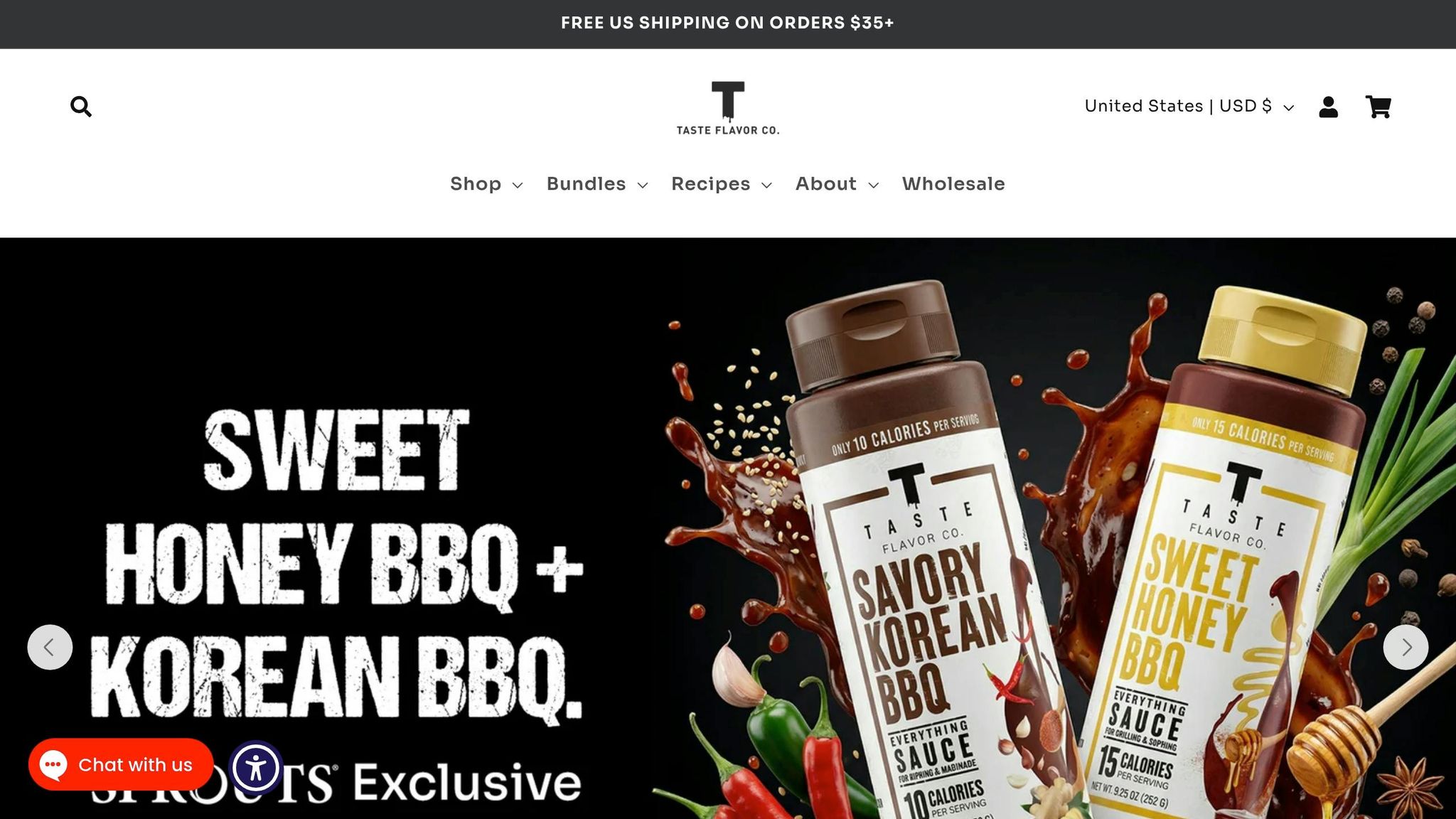
If you're looking for a fast, low-calorie way to enhance your meals, Taste Flavor Co has you covered with sauces ranging from just 5 to 15 calories per serving. Unlike some "zero-calorie" options that rely heavily on artificial ingredients, these sauces are crafted with real ingredients like U.S. honey, parmesan cheese, blue cheese crumbles, and fruit purees such as cherries and mango. With over 1,069 5-star reviews, it's clear these sauces have made an impression.
"We created lower-calorie but just-as-good versions of our favorite sauces so we can fuel our bodies with nutritious food, without depriving ourselves of delicious meals." - Taste Flavor Co
Here’s a closer look at what they offer:
- Buffalo Blue Cheese: At just 5 calories per serving, this is the lightest option available.
- Creamy Southwest Ranch: Made with heart-healthy avocado oil instead of seed oils, it contains over 80% fewer calories than traditional Southwest ranch dressings.
- Fiery Mango Habanero: This bold sauce has over 87% fewer calories and even won "Best Condiment 2025" at Sauce King NYC.
These sauces are perfect for marinades, dressings, or toppings, making it easy to upgrade your meals without adding extra calories. Plus, Taste Flavor Co recently introduced exclusive flavors like Savory Korean BBQ and Sweet Honey BBQ, now available at Sprouts Farmers Market. Individual bottles are priced between $8.49 and $8.99, with bundle options starting at $25.95.
All their sauces are gluten-free and keto-friendly, and many are vegan. Whether you're using them in recipes or enjoying them straight as condiments, these sauces make it simple to stick to your fat loss goals while savoring every bite.
10. Thicken Sauces with Cornstarch or Xanthan Gum
Here's a smart way to get that smooth, thick sauce texture you love - without piling on extra calories.
When heavy cream or butter isn't an option, cornstarch and xanthan gum step in as low-calorie alternatives to thicken sauces. These ingredients help you achieve a rich consistency without compromising your fat loss goals.
Cornstarch is a classic thickener with about 30 calories per tablespoon. To use it, mix 1 tablespoon of cornstarch with cold water or broth to create a slurry. This step prevents clumping. Once mixed, add it to your sauce and bring it to a simmer. The heat activates the thickening power, giving you that creamy texture.
Xanthan gum, on the other hand, is a calorie-free option when used in small amounts. You only need 1/8 to 1/4 teaspoon per cup of liquid, and it works in both hot and cold sauces. To avoid clumps, whisk it in vigorously or blend it into the sauce for a smooth finish.
With these two options, you can whip up everything from low-calorie gravies to creamy dressings and stir-fry sauces. They give you that indulgent texture without the extra calories, making it easier to stick to your goals while enjoying homemade, restaurant-quality meals.
Wrapping It Up
Making small adjustments to your sauces can pack in flavor while keeping your fat loss plan on track. It’s all about smart ingredient swaps and minor tweaks to how you prepare them.
You don’t have to give up taste to shed pounds. Many traditional sauces sneak in extra calories, but there are simple fixes. Swap out heavy cream for Greek yogurt, thicken with vegetable purees, or add zero-calorie flavor enhancers like mustard or citrus. These changes let you enjoy bold flavors without the calorie overload.
"Losing fat doesn't mean eating plain, boring food. By making simple swaps, you can enjoy your favorite flavors without unnecessary calories." - Ben Petersen, Aspire Fit
Start small - try just one swap, like replacing sour cream with Greek yogurt or brightening dishes with fresh herbs. From there, experiment with DIY recipes or explore low-calorie ready-made sauces. When your food tastes great, sticking to a calorie deficit feels less like a chore and more like a lifestyle you can actually enjoy.
FAQs
How do I keep Greek yogurt sauces from curdling?
To keep Greek yogurt sauces smooth and prevent curdling, avoid exposing them to high heat. Instead, add the yogurt when the sauce is either off the heat or on low heat. To minimize temperature shock, try gently warming the yogurt beforehand. Another trick is to mix in a small amount of flour or cornstarch, which acts as a stabilizer. Alternatively, you can temper the yogurt by whisking it with a little hot sauce before fully incorporating it into the dish.
What are the best veggies to blend for creamy low-calorie sauces?
Mild-flavored veggies like zucchini, cauliflower, and avocado are perfect for making creamy, low-calorie sauces. These ingredients help create smooth textures, and avocado even brings in some healthy fats - all while keeping the calorie count in check.
How can I make store-bought sauces lower-calorie without ruining the taste?
To cut calories in store-bought sauces without sacrificing taste, try a few easy substitutions. Swap traditional ranch dressing for light ranch or Greek yogurt-based options. Opt for sugar-free ketchup or BBQ sauce to reduce sugar intake. For a creamy texture, replace full-fat mayo with Greek yogurt or light mayo. You can also add zero-calorie flavor enhancers like mustard to boost taste without adding extra calories. These small changes can help you enjoy flavorful meals while staying on track with your fat loss goals.