


Psyllium Husk: Gluten-Free Sauce Thickener
Psyllium husk is a gluten-free, low-calorie thickener that works in both hot and cold sauces. It absorbs liquid to form a gel, creating smooth textures without altering flavor. Unlike flour or cornstarch, it doesn’t require heat to activate and adds dietary fiber to your dishes. Use psyllium powder for creamy sauces or whole husks for rustic textures. A small amount - 1/8 to 1/4 teaspoon per cup of liquid - is enough to thicken most sauces. Its versatility makes it ideal for savory gravies, creamy recipes, or even sweet glazes. For best results, pre-mix it with liquid to avoid clumps and adjust seasoning after thickening. Psyllium also aligns with keto, vegan, and gluten-free diets, offering a healthier alternative to traditional thickeners.
How Psyllium Husk Thickens Sauces
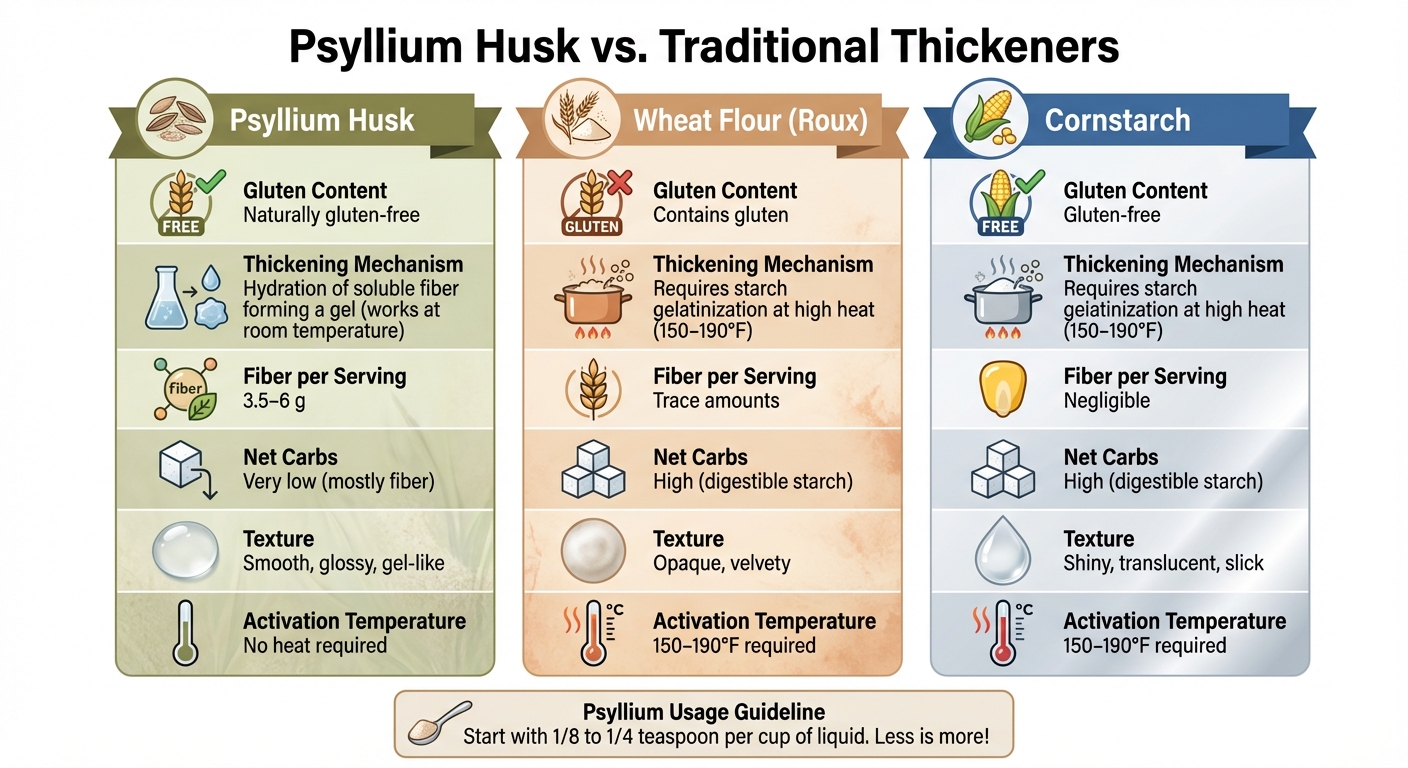
Psyllium Husk vs Traditional Thickeners Comparison Chart
How Psyllium Forms a Gel
Psyllium husk is a powerhouse when it comes to thickening sauces, thanks to its soluble, viscous fiber. When mixed with water, it absorbs several times its weight in liquid, swelling to create a gel-like consistency. What’s even more impressive? It works at room temperature - no heat required. Unlike starch-based thickeners like cornstarch or flour, which need to hit temperatures between 150–190°F to do their job, psyllium gets to work instantly. This makes it perfect for recipes like vinaigrettes, yogurt-based sauces, or any dish where heat isn’t an option. Just whisk in a pinch of psyllium powder, give it a few minutes to hydrate, and watch your sauce thicken beautifully. Its ability to form a gel without cooking sets it apart from more traditional options.
Psyllium vs. Other Thickeners
Psyllium doesn’t just thicken - it creates a texture that’s smooth, glossy, and slightly gel-like, offering a more cohesive feel compared to other thickeners. One of its standout features is that it’s naturally gluten-free, making it a great alternative for those avoiding gluten. Wheat flour, for example, contains gluten, while cornstarch is a refined starch with minimal fiber. Psyllium, on the other hand, not only thickens but also adds a fiber boost to your dish.
When using psyllium, less is more. Start with about 1/8 to 1/4 teaspoon per cup of liquid, and add gradually. Too much can lead to a gummy or stringy texture, so take it slow to get that perfect consistency.
| Aspect | Psyllium Husk | Wheat Flour (Roux) | Cornstarch |
|---|---|---|---|
| Gluten content | Naturally gluten-free | Contains gluten | Gluten-free |
| Thickening mechanism | Hydration of soluble fiber forming a gel | Requires starch gelatinization at high heat | Requires starch gelatinization at high heat |
| Fiber per serving | 3.5–6 g | Trace amounts | Negligible |
| Net carbs | Very low (mostly fiber) | High (digestible starch) | High (digestible starch) |
| Texture | Smooth, glossy, gel-like | Opaque, velvety | Shiny, translucent, slick |
Nutritional Benefits of Psyllium in Sauces
Beyond its thickening abilities, psyllium brings a host of nutritional perks to the table. Just one teaspoon delivers 3.5–6 grams of fiber with only 15–30 calories, making it a smart choice for anyone looking to support digestion or stabilize blood sugar. It’s especially handy for those on low-carb or keto diets.
Psyllium’s gel-like structure slows down gastric emptying and glucose absorption, helping to moderate post-meal blood sugar spikes. Plus, it binds to bile acids, which can help lower total and LDL cholesterol levels.
Since psyllium absorbs a lot of water, it’s important to use it sparingly and allow time for it to fully hydrate. This ensures your sauce has the perfect texture while also delivering its digestive benefits.
How to Use Psyllium Husk in Sauces
Choosing the Right Form and Quantity
Psyllium husk can work wonders as a thickener for sauces, but selecting the right form and amount is key.
It’s available in two forms: whole husks and powder. Whole husks swell gradually, making them ideal for rustic-style gravies, while the powder dissolves quickly, creating smooth and creamy sauces.
Here’s a quick guide to measurements:
- For a thin sauce: use ⅛ teaspoon of powder or ¼ teaspoon of husks per cup.
- For a medium-thick gravy: use ¼ teaspoon of powder or ½ teaspoon of husks.
- For a thick, hearty sauce: use up to ½ teaspoon of powder or 1 teaspoon of husks.
Once you’ve measured the psyllium, make sure to incorporate it properly for the best results.
Step-by-Step Thickening Method
Follow these steps to ensure your sauce thickens evenly without clumps:
- Prepare a slurry: Mix ½ teaspoon of psyllium with 2 tablespoons of cool liquid (water, broth, or milk). Whisk for about 30 seconds until it forms a smooth mixture.
- Add to the sauce: Stir the slurry into your simmering sauce (keep the temperature between 160–180°F and avoid boiling).
- Simmer and stir: Gently whisk the sauce for 2–5 minutes. As it cools, the sauce will thicken further.
If the sauce ends up too thin, add another ⅛ teaspoon of psyllium and simmer briefly. If it’s too thick, balance it out by whisking in extra stock, water, or even blending it with an immersion blender for a smoother texture.
Tips for Texture and Flavor
Psyllium husk creates a silky, glossy finish similar to cornstarch but without leaving a starchy aftertaste. To enhance the richness of your sauce, stir in fats like butter, olive oil, or cream at the very end. These not only add flavor but also help emulsify the sauce.
Keep in mind that psyllium’s thickening properties can slightly mute flavors. After thickening, adjust your seasonings - add a little extra garlic, herbs, or spices to make the flavors pop. And remember, whisking continuously is your best friend here; over-blending can lead to an unappealing slimy texture. Aim for a smooth, velvety sauce that’s easy to pour and full of flavor.
sbb-itb-f97e3b5
Using Psyllium Husk in Different Sauce Styles
Savory Sauces and Gravies
Psyllium husk works wonders as a thickener for savory sauces, offering an alternative to flour or cornstarch. For pan reductions, try whisking in ¼ teaspoon of psyllium powder per 2 cups of liquid after deglazing the pan over low heat. It tightens the sauce within 1–2 minutes without making it cloudy. If you're working with tomato-based sauces like marinara or chili, add psyllium after the tomatoes have cooked down. This gives the psyllium time to hydrate properly, so you avoid over-thickening.
For BBQ-style glazes, psyllium helps create a glossy, clingy coating that adheres beautifully to meats without relying on heavy sugars or corn syrup. For example, to replicate the texture of a smoky, tangy BBQ glaze like Taste Flavor Co's Cherry Smoked BBQ, use ½ teaspoon per 2 cups of sauce. The result is a low-calorie, richly textured glaze that clings perfectly to your dishes. This versatility also opens up exciting possibilities for creamy recipes.
Creamy and Emulsified Sauces
Psyllium isn’t just for gravies - it’s a game-changer for creamy sauces too. Its gel-like structure naturally stabilizes both dairy and plant-based emulsions. For a keto-friendly vegan Alfredo made with cashew cream or coconut milk, whisk in ¼ teaspoon per cup of liquid and heat gently for about 2 minutes. Psyllium thickens at lower temperatures, so it won’t separate during cooking or reheating - a common issue with dairy-free sauces.
This makes it a fantastic option for gluten-free and vegan recipes where you want a creamy texture without compromising dietary preferences. Psyllium’s gel matrix provides the rich body and mouthfeel of traditional cream sauces, but with the added bonus of 3.5–6 grams of fiber per teaspoon and minimal calories. It’s a perfect choice for health-conscious cooks who don’t want to sacrifice texture or flavor.
Sweet and Tangy Sauces
Psyllium also shines in sweet sauces, delivering a smooth, glossy finish. In honey-mustard sauces or sweet glazes, it balances sweetness and acidity while adding a professional-looking shine. For a honey-mustard sauce similar to Taste Flavor Co's Sweet Honey Mustard, whisk the standard psyllium measurement into 1 cup of your honey-mustard-vinegar base and heat gently for about a minute. The gel binds the sugars, creating a smooth, spoon-coating texture.
When working with high-acidity sauces, like those with lemon juice or vinegar, reduce the amount of psyllium to ⅛–¼ teaspoon per cup. Pre-hydrate the psyllium in a neutral liquid slurry for about 30 seconds before adding it to the sauce. This step prevents any graininess. The result is a glossy glaze that’s perfect for drizzling over chicken, vegetables, or even as a dipping sauce. It stays thick and smooth, making psyllium a fantastic, fiber-rich thickener for a variety of sauce styles - all without gluten.
Storage, Reheating, and Tips for Success
Once you've nailed the perfect texture for your sauce, proper storage and reheating techniques are essential to maintain its flavor and consistency.
Storage and Refrigeration
Psyllium-thickened sauces tend to absorb extra water when chilled, which can turn a smooth, pourable sauce into a thicker, pudding-like consistency after about 24 hours.
For best results, store your sauce in airtight glass or plastic containers at or below 40°F (4°C) for up to 4–5 days. Be sure to label the container with the preparation date (MM/DD/YYYY). When you're ready to serve leftovers, whisk in about 1–2 teaspoons of cold liquid per cup of sauce to loosen the gel. Stir vigorously for 1–2 minutes, and gently warm if needed. If you need to store the sauce for longer, freezing is a great option. Pour the sauce into ice cube trays to create 1–2 tablespoon portions. Psyllium-thickened gels freeze well and retain their shape without separating when thawed.
Reheating Methods
When reheating psyllium-thickened sauces, gentle heat is key. On the stovetop, use low heat and stir constantly with a whisk to keep the sauce smooth. Heat until the sauce reaches an internal temperature of 165°F (74°C) for food safety. If you prefer using a microwave, heat the sauce in 15–30 second intervals at 50% power, stirring between each burst to ensure even warming.
Avoid using high heat, as it can cause the gel to break down or turn gummy. For creamier sauces, adding a splash of liquid before reheating can help restore the original consistency. If the sauce feels too thick or slightly "bouncy" after reheating, remove it from the heat and gradually whisk in more liquid until it reaches the desired spoon-coating texture.
Tips for Best Results
To get the most out of psyllium as a thickener, start with ¼ to ½ teaspoon per cup of liquid. Psyllium expands significantly - up to 10–20 times its volume - so a little goes a long way. Sprinkle it in slowly while whisking vigorously for 30–60 seconds to avoid clumping. Let the mixture rest for a few minutes before assessing the thickness.
Adjust the amount of psyllium based on the type of sauce you're making. Light pan sauces require only a small amount, while creamier gravies can handle more for added body and cling. For sauces with high acidity (like those containing lemon juice or vinegar), use about ⅛–¼ teaspoon per cup of liquid and pre-hydrate the psyllium in a neutral liquid before adding it to the sauce.
If you're working with Taste Flavor Co's low-calorie, gluten-free sauces, you can whisk in a small amount of psyllium to create a thicker, more clingy texture without adding extra calories or carbs. After thinning the sauce with additional liquid, be sure to adjust the seasoning to taste.
Conclusion
Psyllium husk offers a unique combination of culinary versatility and health perks. This gluten-free, low-calorie thickener not only creates a smooth, glossy texture similar to traditional options like roux or cornstarch but does so without the extra refined carbs or gluten. Packed with soluble fiber, psyllium supports digestion, heart health, and blood sugar balance. Its gel-like properties make it an excellent choice for thickening sauces, allowing you to enhance your meals while supporting your well-being.
This balance of flavor and health aligns perfectly with what Taste Flavor Co delivers through their low-calorie, gluten-free sauces. With bold options like Spicy Garlic Parm and Cherry Smoked BBQ, their sauces pack flavor into every bite - at just 10 calories or less per serving. Made with real ingredients and no seed oils, they reflect the same health-conscious approach as psyllium husk.
Whether you're following a gluten-free, keto, or weight-conscious lifestyle - or simply enjoy experimenting in the kitchen - psyllium husk deserves a spot in your pantry. As outlined earlier, you can start small: whisk ¼ teaspoon into a cup of pan drippings or tomato sauce, wait a few minutes for the magic to happen, and tweak the amount as needed. You can even stir a pinch into one of Taste Flavor Co's sauces to create a thicker glaze, perfect for grilled chicken or roasted veggies, without adding extra calories or carbs.
With psyllium husk, every meal can be a step toward better nutrition - bringing together great taste and wellness in every bite.
FAQs
What makes psyllium husk a better choice than traditional thickeners for sauces?
Psyllium husk brings a smooth, gel-like consistency to sauces, setting it apart from traditional thickeners like flour or cornstarch, which can sometimes feel gritty or overly starchy. Plus, it's loaded with fiber, which aids digestion and promotes a feeling of fullness. Unlike conventional options that often tack on extra calories without much nutritional value, psyllium husk offers a gluten-free, health-focused way to thicken your favorite dishes.
How can I use psyllium husk to thicken sauces without it clumping?
To avoid clumping when using psyllium husk as a thickener, slowly sprinkle it into your sauce while whisking nonstop. Another option is to pre-soak the psyllium husk in water to form a smooth slurry before mixing it into the sauce. For the best texture, opt for a fine powder version and add it gradually until you reach the right consistency.
Can I use psyllium husk to thicken both savory and sweet sauces?
Psyllium husk is a fantastic gluten-free option for thickening both savory and sweet sauces. Its neutral flavor ensures it won't interfere with the taste of your recipes, while it adds a smooth, velvety texture. To use, simply sprinkle it in slowly, stirring as you go, until you reach the consistency you’re aiming for.