


Artificial vs Natural Sweeteners in Sauces: What’s the Difference?
When choosing a sweetener for sauces, think beyond calories. Artificial sweeteners like sucralose and aspartame are much sweeter than sugar, calorie-free, and heat-stable, but they may alter gut health and increase cravings. Natural options such as honey, maple syrup, stevia, and monk fruit bring flavor complexity and minor nutrients but can add calories. Stevia and monk fruit stand out as plant-based, zero-calorie alternatives. Your choice should depend on flavor, cooking needs, and dietary goals.
Quick Overview:
- Artificial Sweeteners: Sucralose, aspartame – calorie-free, heat-stable (except aspartame), may disrupt gut health.
- Natural Sweeteners: Honey, maple syrup – richer flavor, adds calories, supports caramelization.
- Zero-Calorie Naturals: Stevia, monk fruit – plant-based, low glycemic, no aftertaste (monk fruit).
| Sweetener | Calories | Heat Stability | Flavor Impact | Best Use |
|---|---|---|---|---|
| Sucralose | 0 | High | Neutral sweetness | Sugar-free sauces |
| Aspartame | 0 | Low | Sweet, heat-sensitive | Cold dressings |
| Honey | 15-21 | High | Floral, caramelization | BBQ glazes, marinades |
| Maple Syrup | 15-21 | High | Earthy, rich | Vinaigrettes, savory sauces |
| Stevia | 0 | Medium | Bitter (if overused) | Keto-friendly marinades |
| Monk Fruit | 0 | Medium | Clean, no aftertaste | Low-carb sauces |
Choose based on your sauce’s flavor, cooking method, and health preferences.
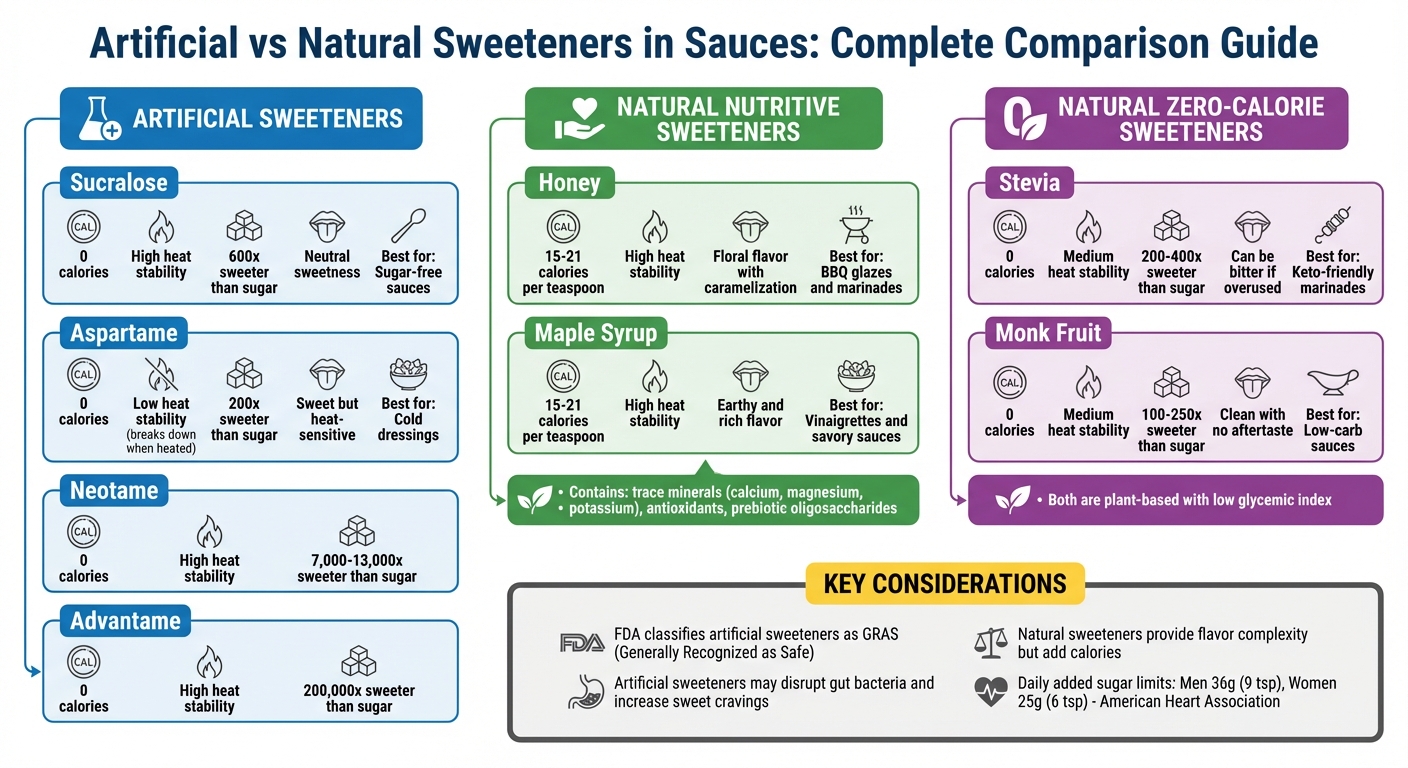
Artificial vs Natural Sweeteners Comparison Chart for Sauces
What Are Artificial and Natural Sweeteners?
Understanding artificial and natural sweeteners starts with knowing their origins and how they’re made. These differences go beyond marketing claims - they’re rooted in chemistry and production methods. Let’s break it down, starting with artificial sweeteners.
Artificial Sweeteners
Artificial sweeteners are man-made compounds that don’t exist in nature. Popular examples include sucralose, aspartame, saccharin, neotame, and advantame. Each has a unique chemical structure - saccharin, for instance, is a sulfonamide, while aspartame is a dipeptide formed from amino acids. These sweeteners are incredibly intense, ranging from 200 to 20,000 times sweeter than regular sugar. Advantame, for example, is about 20,000 times sweeter than table sugar. Because of this, only tiny amounts are needed to flavor food and drinks, which is why many products made with these sweeteners are nearly calorie-free.
The FDA has classified several artificial sweeteners, such as acesulfame potassium, aspartame, and sucralose, as Generally Recognized as Safe (GRAS).
Natural Sweeteners
Natural sweeteners come from plants, trees, or animals and undergo minimal processing. They fall into two main categories: nutritive (calorie-containing) and non-nutritive (low or zero calorie).
Nutritive natural sweeteners include honey, maple syrup, agave, and coconut sugar. Honey is made by bees using flower nectar and the enzyme invertase. Maple syrup comes from the sap of maple trees, agave is derived from blue agave plants, and coconut sugar is sourced from coconut palm sap. These sweeteners contain natural sugars like fructose, glucose, or sucrose, providing about 15–21 calories per teaspoon.
Non-nutritive natural sweeteners include stevia and monk fruit. Stevia is extracted from the leaves of the Stevia rebaudiana plant and is 200–400 times sweeter than sugar. Monk fruit, derived from a small green melon native to southern China, is about 100–250 times sweeter. Unlike artificial options, these plant-based sweeteners rely on naturally occurring compounds - steviol glycosides in stevia and mogrosides in monk fruit. Additionally, raw honey and pure maple syrup contain prebiotic oligosaccharides, antioxidants, and trace amounts of vitamins and minerals.
sbb-itb-f97e3b5
How Sweeteners Affect Sauce Flavor and Cooking
Let’s dive into how different sweeteners can shape the flavor of your sauce and how they behave during cooking.
Taste Profile Differences
The sweetener you pick can completely shift your sauce's flavor. For instance, sucralose, which is 600 times sweeter than sugar, delivers intense sweetness without changing the sauce's texture. On the other hand, natural sweeteners like maple syrup add rich, caramel-like notes, making them great for BBQ sauces, while honey lends subtle floral undertones. These natural options also bring extra moisture and thickness to the sauce but come with added calories - roughly 15–21 per teaspoon.
Some sweeteners, like stevia, can leave a bitter aftertaste. If that’s an issue, blending stevia with another sweetener can help smooth out the bitterness. Monk fruit extract, by contrast, offers a cleaner finish without any aftertaste. These differences are key to choosing the right sweetener for your recipe and cooking style.
Heat Stability in Cooking
Sweeteners also vary widely in how they hold up under heat. Sucralose stands out for its heat stability, making it ideal for cooking and baking. According to the OSU Extension Service, "Sucralose... is the most heat stable of all the artificial sweeteners. It can be used in cooking and baking without flavor loss". Other artificial sweeteners like acesulfame potassium, neotame (7,000–13,000 times sweeter than sugar), and advantame (20,000 times sweeter) also perform well under high heat.
In contrast, aspartame breaks down when exposed to heat. The OSU Extension Service notes, "Aspartame breaks down if heated so it is not a good choice for baking or preserving but can be added to foods after cooked and cooled". So, if you're using aspartame-based sweeteners (like Equal), they’re best added to sauces after cooking and cooling.
Natural sweeteners like monk fruit extract, honey, and maple syrup handle high heat effectively, making them suitable for sauces that require boiling or reduction. Honey and maple syrup can also encourage caramelization, adding depth to your sauce. However, most high-intensity sweeteners lack the structure needed for the Maillard reaction, which gives sauces a browned, caramelized flavor.
Health Effects of Artificial vs Natural Sweeteners
Calorie and Nutritional Differences
Artificial sweeteners like sucralose and aspartame are calorie-free, while natural sweeteners such as honey and maple syrup contain about 15–21 calories per teaspoon. This difference can be important when tracking your daily calorie intake, especially in recipes like sauces, where even small amounts can add up quickly.
But calories aren't the whole story. Natural sweeteners bring more to the table - literally. For example, maple syrup contains small amounts of calcium, magnesium, and potassium, while honey offers additional nutrients and antioxidants. On the other hand, artificial sweeteners provide intense sweetness - anywhere from 200 to 20,000 times sweeter than regular sugar - without any nutritional perks.
Interestingly, research from Cornell University suggests that "neither natural nor synthetic sweeteners are metabolically inert". Some studies even indicate that artificial sweeteners could disrupt gut bacteria (like Bacteroidetes and Firmicutes), potentially influencing glucose tolerance over time.
Stevia and monk fruit occupy a unique spot between artificial and natural sweeteners. They’re plant-based, zero-calorie, and have a low glycemic index, making them a standout choice compared to high-calorie natural options like agave or dates. Their intense sweetness and minimal impact on blood sugar make them appealing for those seeking healthier alternatives.
Sweeteners for Special Diets
Your choice of sweetener often depends on your dietary goals and restrictions. For keto or low-carb diets, options like stevia, monk fruit, or erythritol are ideal. These sweeteners don’t raise blood sugar levels and can help maintain ketosis, making them suitable for sauces in low-carb recipes.
Vegans, on the other hand, need to avoid animal-derived products like honey. Maple syrup, agave, or stevia are excellent substitutes for sauces like teriyaki, salad dressings, or glazes.
For individuals managing diabetes, natural non-nutritive sweeteners such as stevia and monk fruit are great options. They have little to no impact on blood sugar levels. Dr. Ambrish Mithal, Chairman and Head of Endocrinology and Diabetes at Max Hospital, advises:
"If sweet cravings persist, it is generally safe to consume sweeteners in small amounts. A daily intake of 1-2 servings of sweeteners is considered safe, though conclusive data is lacking" .
When it comes to weight management, artificial sweeteners might seem like a good choice, but they come with a caveat. Some studies suggest they may not fully satisfy the brain’s reward system, potentially leading to increased sweet cravings and overeating. If your focus is on nutrient density rather than calories, natural sweeteners like honey or maple syrup can provide antioxidants and other nutrients.
For those with digestive sensitivities or who have undergone bariatric surgery, sugar alcohols like sorbitol and mannitol should be avoided. These can cause bloating and diarrhea, making them a poor choice for sauces and other recipes.
Choosing the Right Sweetener for Your Sauces
Balancing Flavor and Health Goals
When selecting a sweetener for your sauces, it’s all about finding the right balance between heat stability, flavor complexity, and dietary needs. For instance, if you’re making BBQ sauces or glazes that require caramelization, natural sweeteners like honey or maple syrup are excellent choices. They not only caramelize beautifully during cooking but also create that sticky texture and deep color that artificial sweeteners just can’t replicate.
Heat stability plays a big role too. Aspartame, for example, is best suited for cold preparations since it breaks down when exposed to heat. Antonette Hardie, MS, RD, LD, a staff dietitian at Ohio State Wexner Medical Center, explains:
"Sucralose... is good for baking as a substitute for sugar, but you need far less of it because it's so much sweeter-tasting than sugar".
Because sucralose is about 600 times sweeter than regular sugar, only a small amount is needed, making it a practical option for marinades and hot sauces.
Natural sweeteners like honey and maple syrup not only enhance sauces with their caramelization potential but also bring earthy, complex flavors to the table. They’re especially useful for balancing acidity in tomato-based sauces without overpowering other ingredients. These factors make them versatile and flavorful options for a variety of dishes.
Examples of Sweetener Applications
Here’s how different sweeteners shine in specific sauce applications:
- BBQ glazes: Honey or maple syrup is ideal for creating that thick, sticky coating on ribs or chicken. Their ability to caramelize makes all the difference.
- Keto-friendly dishes: Stevia, which is 100 to 300 times sweeter than sugar, works well in marinades or stir-fry sauces. Just a few drops are enough to add sweetness without the carbs.
- Cold sauces and dressings: Agave nectar or maple syrup dissolve easily, adding a mellow sweetness to salad dressings or mustard-based sauces. Aspartame is another option for cold dishes, but it should be added after cooking to maintain its sweetness.
- Sugar-free marinades: Erythritol and monk fruit are great for heat-stable, sugar-free options. They won’t affect blood sugar levels, but keep in mind that sugar alcohols like erythritol can cause digestive discomfort if used excessively.
| Sweetener | Best Sauce Application | Why It Works |
|---|---|---|
| Honey | BBQ glazes, meat marinades | Caramelizes well and adds floral depth |
| Maple Syrup | Vinaigrettes, savory sauces | Heat-stable with an earthy flavor |
| Sucralose | Sugar-free sauces | 600x sweeter than sugar and heat-stable |
| Stevia | Keto marinades, stir-fry sauces | Zero calories and intensely sweet |
| Aspartame | Cold dressings or dips | 200x sweeter than sugar but heat-sensitive |
Conclusion
Deciding between artificial and natural sweeteners for your sauces comes down to striking a balance between health considerations and flavor preferences. Artificial sweeteners like sucralose and aspartame are calorie-free and don’t spike blood sugar, making them suitable for managing diabetes or sticking to low-calorie diets. However, their intense sweetness can overstimulate taste buds and potentially increase cravings for sweets.
As Dr. Melissa Young, a Functional Medicine Specialist at Cleveland Clinic, explains:
"No artificial sweetener can turn an unhealthy food into a healthy one."
On the other hand, natural sweeteners like honey and maple syrup bring rich flavors and minor nutritional benefits but also add sugar to your diet. They’re perfect for enhancing BBQ glazes and marinades with caramelization and depth, but moderation is essential. For context, the American Heart Association advises limiting added sugar intake to 36 grams (9 teaspoons) per day for men and 25 grams (6 teaspoons) for women.
If you’re looking for a compromise, plant-based options like stevia and monk fruit provide zero-calorie, natural alternatives. Sugar alcohols such as erythritol are another option for keto-friendly sauces, though they may cause digestive issues if overused.
FAQs
Which sweetener works best for caramelizing sauces?
Natural sweeteners, such as honey, are ideal for caramelizing sauces. Their natural sugars are perfect for triggering the Maillard reaction and caramelization, which enrich both the flavor and texture of the sauce.
How do I swap sugar for stevia or monk fruit in a sauce?
When substituting sugar with stevia or monk fruit in a sauce, choose a natural, sugar-free sweetener that matches sugar's sweetness level. If you're using the liquid versions of stevia or monk fruit, you can replace sugar directly without adjustments. For powdered or granular forms, you'll need to tweak the amount since their sweetness can vary - start small and adjust to taste. Both sweeteners are great for keto or low-carb diets and won't spike blood sugar levels.
What’s the safest sweetener choice for diabetes or keto sauces?
When it comes to making diabetes- or keto-friendly sauces, it's important to pick sweeteners that won't spike blood sugar levels. Some good options include stevia, sucralose, aspartame, and saccharin, which are generally considered safe and effective. Sugar alcohols like sorbitol or xylitol can also be used, but they might lead to digestive issues for some people. Among these, stevia and sucralose stand out as popular choices because they have little to no impact on blood glucose and work well with keto diets.