


How to Make Chicken Taste Better Without Extra Calories
Chicken can be delicious and healthy without adding extra calories. Here's how:
- Use Herbs and Spices: Season with paprika, garlic powder, black pepper, oregano, cumin, rosemary, or turmeric for bold flavors without calories.
- Try Dry Rubs: Mix spices like paprika, garlic powder, and black pepper. Rub directly onto the chicken for a flavorful crust.
- Marinate Smartly: Use acids like lemon juice or vinegar with garlic, ginger, or chili for tender, flavorful chicken without oil.
- Cook with High Heat: Roast, grill, or pan-sear to create caramelization and lock in juices. Avoid boiling, which strips flavor.
- Low-Calorie Sauces: Add sauces like mustard, hot sauce, or low-calorie options (e.g., Taste Flavor Co) for a tasty finish.
These simple techniques ensure your chicken is flavorful, juicy, and calorie-conscious.
Herbs and Spices That Add Zero Calories
The secret to flavorful chicken isn’t butter or oil - it’s sitting in your spice cabinet. Most spices contribute virtually no calories in the amounts typically used. For example, a half-tablespoon of mixed seasoning adds just 14–20 calories, yet it can completely transform plain chicken into a dish packed with flavor. Spice blends also help cut back on added salt - by as much as 50% - while still delivering bold taste.
Best Herbs and Spices for Chicken
Paprika is a must-have - it shows up in more than 90% of top-rated chicken recipes. Just a teaspoon provides 31% of your daily vitamin A and helps create a beautiful golden crust. Garlic powder is another essential. Unlike fresh garlic, it spreads evenly and doesn’t burn as easily at high temperatures.
Black pepper is more than just heat - it contains piperine, which boosts the absorption of curcumin (found in turmeric) by an astonishing 2,000%. Oregano adds a bold Mediterranean flair, while cumin brings warm, earthy tones perfect for Mexican or Middle Eastern-inspired dishes. Rosemary stands up well to the high heat of grilling or roasting. For a pop of color and anti-inflammatory perks, sprinkle on turmeric - it delivers a vibrant golden hue without adding any calories. Each of these spices elevates flavor while keeping your meal light and nutritious.
How to Make a Dry Rub
The 1-tablespoon rule is a great starting point: use about 1 tablespoon of dry rub per pound of chicken. Before seasoning, pat the chicken dry with paper towels - moisture can prevent the spices from sticking. For a versatile blend, mix 2 tablespoons each of garlic powder, onion powder, and paprika with 1 tablespoon of black pepper and 1 teaspoon each of dried oregano and thyme.
Apply the rub 15–30 minutes before cooking, or refrigerate the seasoned chicken for up to 24 hours to deepen the flavor. If you’re using skin-on chicken, lift the skin and rub the seasoning directly onto the meat - this ensures the flavor stays even if the skin is removed. Store any leftover spice mix in an airtight container in a cool, dark place, and it’ll stay fresh for up to six months.
Next, learn how to enhance your chicken even further with low-calorie marinades.
sbb-itb-f97e3b5
Low-Calorie Marinades and Seasonings
Oil-free marinades pack plenty of flavor by blending acids, aromatics, and spices. Acids like lemon juice, lime juice, and vinegars help tenderize chicken by breaking down surface muscle fibers, while also enhancing how well the meat absorbs flavors. Ingredients like garlic, grated ginger, scallions, and jalapeños add bold taste without piling on calories.
Timing matters. High-acid marinades are quick - 30 minutes to 2 hours is usually enough - but leaving chicken in the marinade for more than 4 hours can compromise its texture. To ensure even flavor absorption, pound the chicken to an even thickness (around 3/4 inch) before marinating. Now, let’s dive into some oil-free recipes that make the most of these techniques.
Oil-Free Marinades with Vinegar and Citrus
Start with an acid base like lemon juice, lime juice, orange juice, or vinegars such as balsamic, apple cider, or rice vinegar. These not only tenderize but also carry the flavors of your spices and herbs. For example:
- Greek-style marinade: Lemon juice, minced garlic, oregano, and black pepper.
- Fajita-inspired blend: Lime juice, chili powder, cumin, cilantro, and minced jalapeño.
- Asian-inspired mix: Rice vinegar, grated ginger, garlic, and red pepper flakes.
Salt is a key ingredient, helping the marinade penetrate deeper into the meat. Since only a portion of the marinade’s flavors make it into the chicken, using low-sodium soy sauce, tamari, or even chicken broth can replace oil while keeping calories low. Just remember: never reuse marinade that has been in contact with raw chicken unless it’s boiled for at least one minute.
Condiments and Sauces Under 10 Calories
Low-calorie condiments can also elevate your chicken dishes. Mustard and hot sauce are simple yet flavorful choices to keep calories in check. For more variety, Taste Flavor Co offers sauces that add a gourmet twist without breaking your nutrition goals. Their lineup includes:
- Garlic Herb: A savory, aromatic option.
- Honey BBQ: Sweet and smoky without added sugar.
- Buffalo Blue: A spicy kick with a creamy blue cheese finish.
- Lime Crema: A zesty, taco-inspired choice.
- Tomato Basil: Perfect for Italian-style dishes.
These sauces turn plain chicken into something special, all while sticking to your calorie-conscious plan. Pair these marinades and sauces with proper cooking techniques, and you’ll enjoy flavorful, lean meals every time.
Cooking Methods That Add Flavor Without Calories
The way you cook chicken can make a world of difference in its flavor. Techniques like grilling, broiling, and pan-searing rely on high heat to create caramelization and a smoky char, giving lean chicken a richer, more indulgent taste - all without adding fat. Roasting at high temperatures also enhances the natural sweetness of chicken through caramelization, while methods like boiling can actually strip away flavor.
Air frying is another standout method, delivering a crispy exterior and tender interior without the need for extra oil. Let’s dive into how these high-heat techniques can naturally amplify flavor.
High-Heat Cooking for Better Flavor
Baking chicken at 450°F is a fantastic way to lock in juices. To achieve a roasted texture, leave the chicken uncovered while cooking. Be sure to use a large baking dish (like a 9x13 inch pan) where the pieces don’t touch - this ensures heat circulates evenly, resulting in better browning. For grilling, using the spatchcock technique (removing the backbone) not only ensures even cooking but also allows the meat to soak up a natural smoky flavor.
Another great option is pan-searing. Cook the chicken until a rich, golden crust forms, then let it rest for about 5 minutes to retain its juices. To avoid dryness, use a meat thermometer and remove the chicken from heat when it reaches 160°F–165°F. Overcooking is the main culprit behind dry, flavorless chicken. These methods are all about getting the most flavor while keeping calories in check. Next, let’s look at how to create a beautiful brown crust without adding oil.
How to Brown Chicken Without Oil
To prevent sticking without using fats, line your baking sheets with parchment paper or silicone baking mats. Alternatively, a light coat of nonstick cooking spray can help achieve browning without the calories of traditional oils. For stovetop cooking, try water-sautéing: pour about 1/4 inch of water into a deep skillet, bring it to a boil, and then add your chicken, seasoning the exposed side. This method can mimic the effect of pan-frying - minus the oil.
When baking chicken at 425°F, keep an eye on the clock. Around 25 minutes is usually enough to develop flavor while keeping the meat moist. A low-calorie chicken recipe using this method has earned a 4.3/5 star rating from 92 reviewers, with many praising how "juicy" and "moist" the chicken remains, even without relying on high-calorie fats.
Using Taste Flavor Co Sauces for Better Chicken
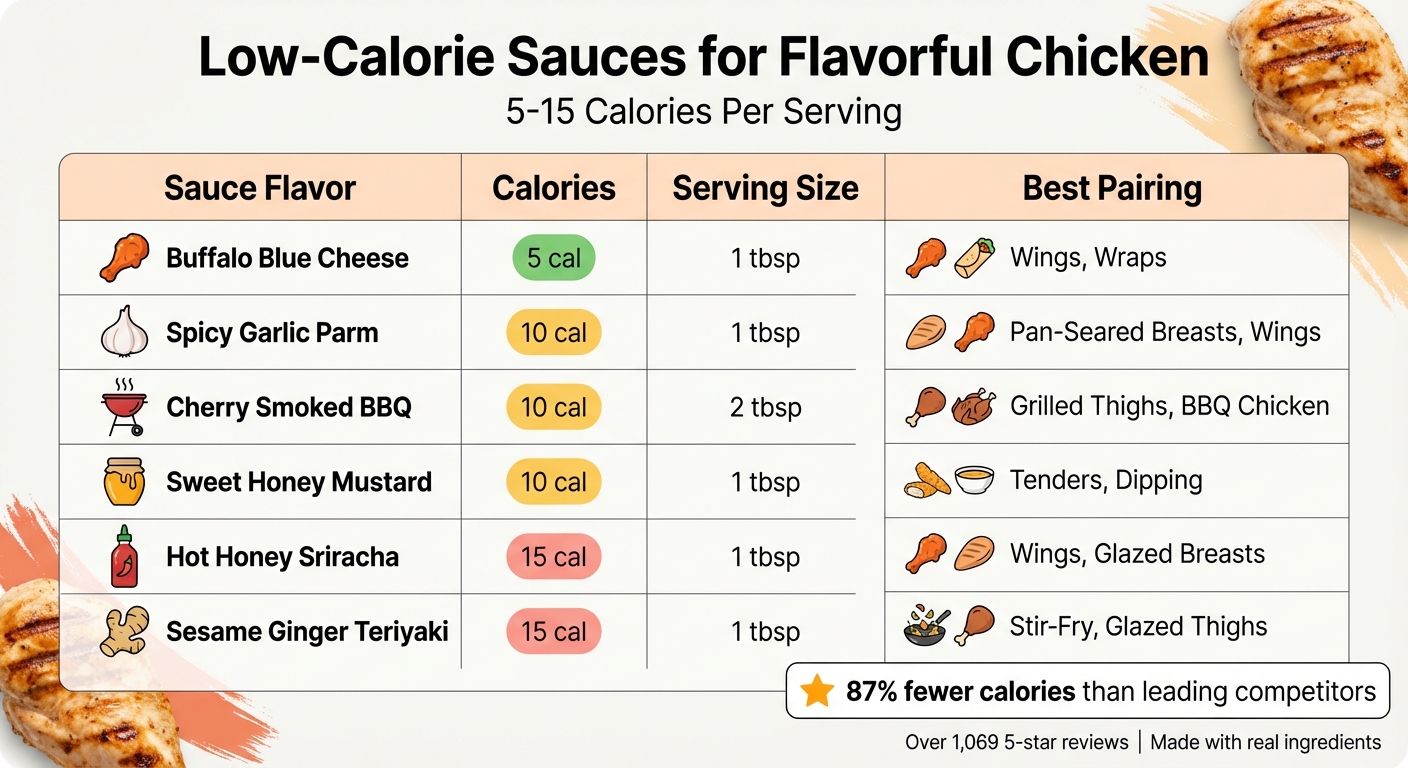
Low-Calorie Chicken Sauces Comparison Chart
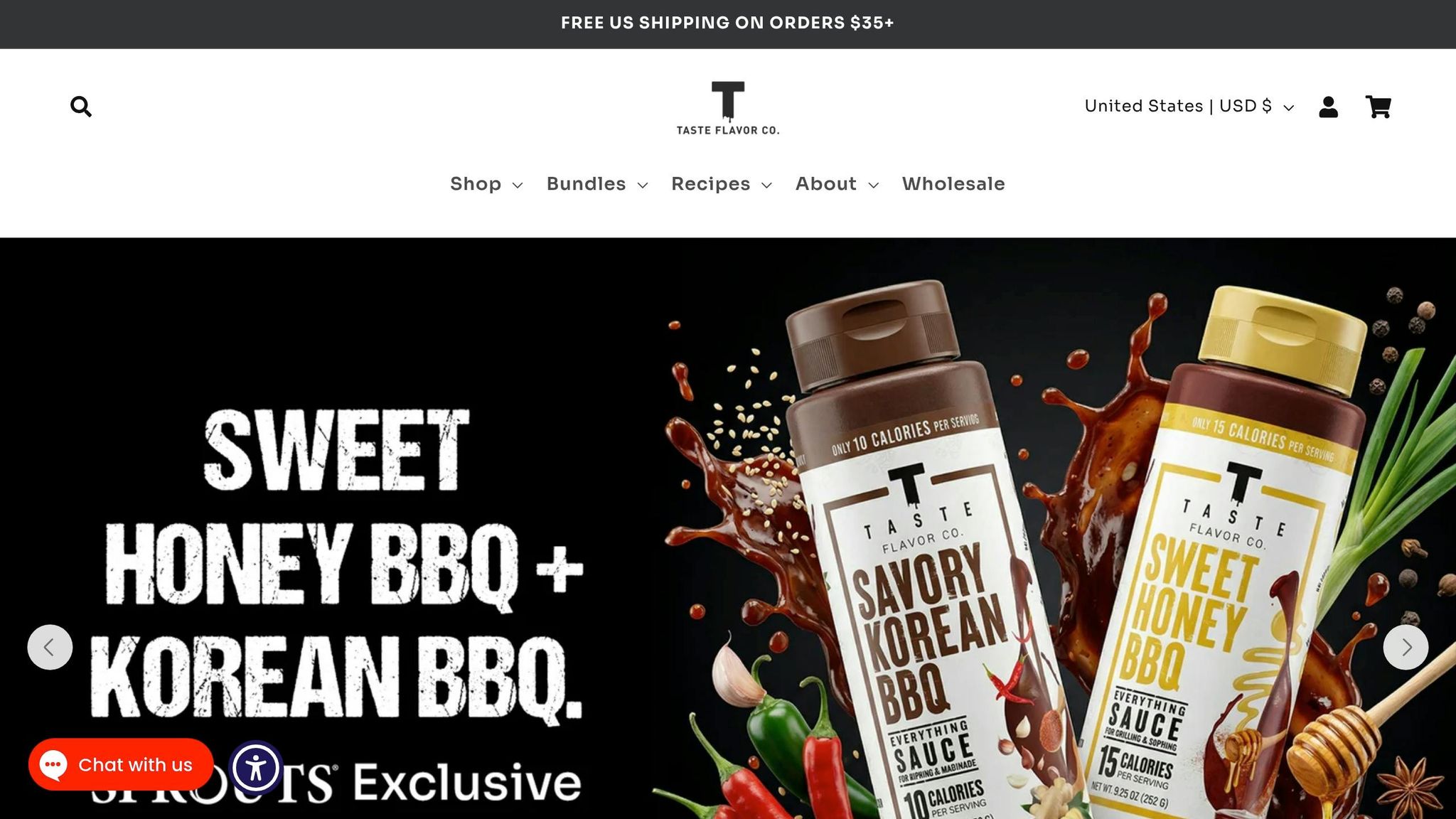
Once you've nailed high-heat cooking and oil-free browning, it's time to add bold flavors - without packing on the calories. Taste Flavor Co sauces are here to help. These low-calorie options, ranging from just 5 to 15 calories per serving, are crafted with real ingredients like parmesan, U.S. honey, and cherries. With over 1,069 glowing 5-star reviews, these sauces have become a go-to for home cooks looking to break free from what the brand calls the "dry chicken era" of meal prepping. Let’s dive into the variety of flavors they offer.
Taste Flavor Co Sauce Options
Taste Flavor Co sauces are a simple way to elevate your chicken dishes while keeping things light. Whether you're into smoky BBQ or tangy Buffalo, there's a flavor for every craving. Here’s a rundown of their chicken-friendly options:
- Buffalo Blue Cheese: At just 5 calories per tablespoon, this sauce is made with real blue cheese crumbles. Perfect for wings or wraps.
- Spicy Garlic Parm: With 10 calories per tablespoon, this sauce combines real parmesan with a zesty kick - great for pan-seared breasts or stir-fries.
- Cherry Smoked BBQ: Smoky and sweet, this BBQ sauce delivers 10 calories per 2-tablespoon serving and pairs beautifully with grilled thighs or BBQ chicken.
- Hot Honey Sriracha: A sweet-and-spicy blend of real honey and sriracha, offering 15 calories per tablespoon. Ideal for wings or glazed breasts.
- Sesame Ginger Teriyaki: This Asian-inspired glaze has 15 calories per tablespoon and works wonders on stir-fries or glazed thighs.
- Fiery Mango Habanero: A runner-up for "Best Condiment", this sauce packs a punch while containing 87% fewer calories than leading competitors.
| Sauce Flavor | Calories per Serving | Serving Size | Best Chicken Pairing |
|---|---|---|---|
| Buffalo Blue Cheese | 5 | 1 tbsp | Wings, Wraps |
| Spicy Garlic Parm | 10 | 1 tbsp | Pan-Seared Breasts, Wings |
| Cherry Smoked BBQ | 10 | 2 tbsp | Grilled Thighs, BBQ Chicken |
| Sweet Honey Mustard | 10 | 1 tbsp | Tenders, Dipping |
| Hot Honey Sriracha | 15 | 1 tbsp | Wings, Glazed Breasts |
| Sesame Ginger Teriyaki | 15 | 1 tbsp | Stir-Fry, Glazed Thighs |
How to Use These Sauces with Chicken
For a flavor-packed dish, marinate lean chicken with 1–2 tablespoons of sauce per serving before cooking. If you're glazing, apply the sauce during the last few minutes of broiling or grilling to create a caramelized finish - no need for oil-based marinades. Alternatively, simmer browned chicken with the sauce over medium-low heat for about five minutes to achieve a thick, even coating.
In January 2026, Taste Flavor Co shared a recipe for Spicy Garlic Parmesan Chicken Breast using this method. The recipe calls for four boneless, skinless breasts sautéed with minced garlic, then simmered in ½ cup of Spicy Garlic Parm sauce. The result? A dish that delivers 320 calories and 31.5 grams of protein per serving. Individual bottles of these sauces are priced around $8.99, with bundle deals starting at $25.95.
Conclusion
You can boost chicken flavor without adding calories by focusing on four main strategies: calorie-free seasonings, low-calorie marinades, smart cooking techniques, and bold sauces. Aromatic herbs like garlic powder and spices such as smoked paprika pack a punch with almost no calories. Citrus juices and vinegar-based marinades add brightness and cut through the blandness of lean chicken without extra fat. These seasoning and marinade methods form the foundation for high-heat cooking techniques that lock in flavor.
Cooking methods like grilling, searing, or roasting at 425°F create a golden crust through the Maillard reaction, adding savory richness without needing extra oil. A final touch of fresh herbs and a squeeze of lemon can elevate flavor by more than 40%. These techniques combine to layer flavor: herbs release their essential oils, spices bloom with heat, and acids bring a fresh, tangy finish.
To take things further, Taste Flavor Co sauces incorporate these principles perfectly. With just 10 calories or less per serving, they offer a flavorful alternative to traditional high-calorie condiments - saving up to 140 calories compared to regular ranch dressing. Whether used for marinating, glazing, or simmering, these sauces provide the moisture and flavor that lean chicken often needs, without relying on oil-based preparations.
FAQs
How do I keep chicken from drying out?
To keep chicken juicy and flavorful, focus on methods that help it retain its natural moisture. Start by marinating the chicken with citrus juices, such as lemon or lime, and adding fresh zest for extra brightness. Toss in some herbs and spices to boost the flavor even more. When it comes to cooking, techniques like grilling or broiling work well to enhance taste without drying out the meat. Most importantly, avoid overcooking - it’s one of the main reasons chicken turns dry. A good marinade beforehand can make all the difference in locking in that moisture.
How long should I marinate chicken in lemon juice or vinegar?
Marinating chicken in lemon juice or vinegar is best done for 30 minutes to 2 hours. This timeframe gives the acidity enough time to tenderize the meat and boost its flavor. However, leaving it for too long can break down the proteins excessively, leading to a mushy texture you’ll want to avoid.
When should I add sauce so it doesn’t burn?
To keep your sauce from burning, it's best to add it toward the end of cooking. High heat can scorch sauces, leaving them bitter or unpleasant.
Here’s how to do it:
- Cook your chicken until it's nearly done.
- Reduce the heat or move the chicken away from direct heat.
- Add the sauce in the last few minutes or after cooking, allowing it to warm gently without burning.
This way, your sauce will enhance the flavor without any risk of burning.