


How to Make Keto Chimichurri with Fresh Herbs
Keto chimichurri is a simple, low-carb sauce made with parsley, garlic, olive oil, and vinegar. It's perfect for ketogenic diets, offering bold flavor, healthy fats, and minimal carbs (around 1g net carbs per 2 tablespoons). This herb-based sauce also provides nutrients like Vitamins A, C, and K, making it a great addition to grilled meats, seafood, or vegetables.
Key points:
- Low-carb: 0.49g–2.1g net carbs per serving.
- Healthy fats: 14g–22g from olive or avocado oil.
- Nutrient-rich: Contains vitamins and antioxidants from raw herbs.
- Diet-friendly: Gluten-free, vegan, and Paleo compliant.
To make it, blend fresh parsley, oregano, garlic, olive oil, vinegar, and spices. Adjust flavors to your liking and store in the fridge for up to 7 days or freeze for longer. Use it as a marinade, dressing, or topping for your favorite dishes. Experiment with substitutions like cilantro or lemon juice to customize the taste.
Benefits of Using Fresh Herbs
Fresh herbs bring a bold, vibrant flavor that dried herbs simply can't match. Take fresh Italian flat-leaf parsley, for instance - it adds distinct, fresh, and woody notes that give chimichurri its signature depth. Dried herbs, on the other hand, lose much of their essential oils during processing, which dulls their bright and invigorating flavor.
But it’s not just about taste - fresh herbs are packed with nutrients. Parsley and oregano, for example, are rich in vitamins like K1, C, and E, as well as fiber and essential minerals such as iron and calcium. A typical 2-tablespoon serving of chimichurri made with these fresh ingredients contains around 62 mcg of Vitamin K. Plus, because chimichurri is served raw, heat-sensitive nutrients and antioxidants remain intact - something often lost when herbs are dried or cooked. This is particularly beneficial for keto dieters looking to maximize their nutrient intake.
"Herbs are an often underappreciated source of green nutrition. They contain unique antioxidants, vitamins, essential oils and other nutrients that can help boost immunity and promote proper detoxification."
– Kathryn Matthews, Board Certified Functional Health Coach
For those on a keto diet, fresh herbs offer even more advantages. They’re low in carbs and nutrient-dense, making them a perfect fit. Parsley, for example, contains just about 1 gram of carbohydrates per 1/4 cup, providing an almost zero-carb nutritional boost. Meanwhile, raw garlic acts as a prebiotic, supporting gut health. When paired with olive oil, these herbs help your body absorb fat-soluble vitamins like A, E, and K.
Homemade chimichurri also retains far more antioxidants and polyphenols than store-bought versions, which often rely on preservatives and reduced herb content. By using fresh ingredients, you not only enhance flavor and nutrition but also keep the sauce naturally low in carbohydrates.
sbb-itb-f97e3b5
Ingredients for Keto Chimichurri
Core Ingredients
Making keto chimichurri starts with a few fresh, flavorful staples. The base is flat-leaf Italian parsley, known for its robust taste, unlike curly parsley, which is often bitter and better suited for garnishes. Add fresh oregano (if available) and 4 to 6 garlic cloves to give the sauce its signature boldness.
The fat base comes from extra virgin olive oil, which not only adds healthy fats but also lends a grassy, rich flavor. For acidity, red wine vinegar is the traditional choice, though white wine vinegar works just as well. To season, you'll need sea salt, cracked black pepper, and red pepper flakes for a touch of heat. Optional ingredients like shallots or red onions, ground cumin, or smoked paprika can add extra layers of flavor.
Using fresh, seasonal herbs can elevate both the taste and nutritional value of the sauce. A typical serving (about 1 tablespoon) contains between 0.1 g and 2.1 g of net carbs, along with 9 g to 17 g of healthy fats.
Ingredient Substitutions
Chimichurri is highly adaptable, so you can tweak it to suit your preferences or what you have available while keeping it keto-friendly. For herbs, you can swap parsley with cilantro, basil, or mint. If cilantro tastes soapy to you, simply use more parsley. For the acidic component, apple cider vinegar can be a great alternative, offering potential blood sugar benefits, while lemon or lime juice adds a bright, citrusy twist. If you want a neutral oil that lets the herbs take center stage, avocado oil is a fantastic substitute for olive oil.
Shallots can be replaced with yellow or sweet onions, and while fresh garlic is ideal, jarred minced garlic works in a pinch. Red pepper flakes can be swapped for fresh peppers like Fresno, Serrano, or jalapeño to customize the spice level. A pro tip: let minced garlic and shallots soak in your chosen vinegar for about 10 minutes before adding the oil - this helps soften their sharp, raw flavors.
Once you've selected your ingredients, you're ready to start mixing up your vibrant, keto-friendly chimichurri.
Step-by-Step Instructions
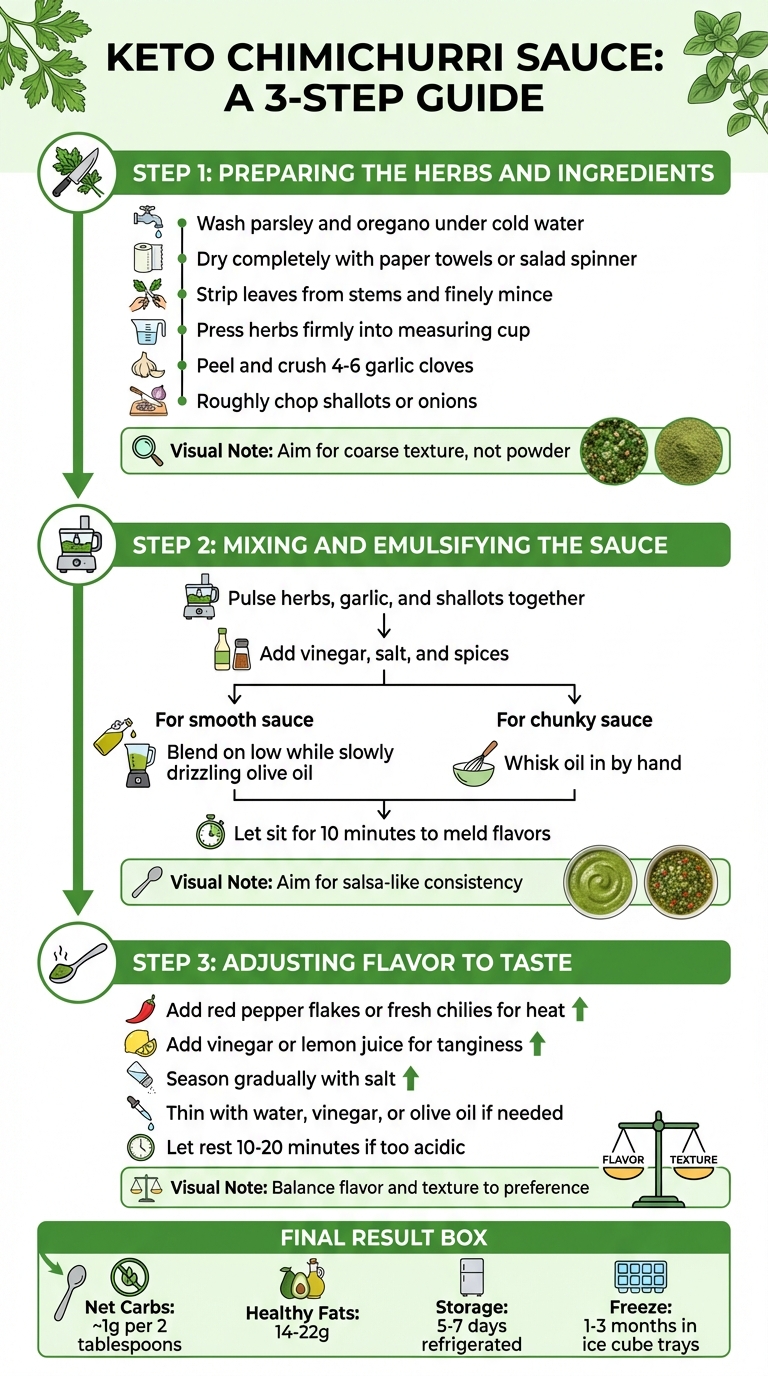
How to Make Keto Chimichurri: Step-by-Step Recipe Guide
Preparing the Herbs and Ingredients
Start by washing the parsley and oregano thoroughly under cold water. Dry them completely using paper towels or a salad spinner - excess moisture can thin out your sauce. Once dry, strip the leaves from the stems and finely mince them with a sharp knife or pulse them in a food processor for a slightly coarse texture. When measuring the herbs, press them firmly into the measuring cup to ensure the right herb-to-oil ratio. Next, peel and crush the garlic cloves and roughly chop the shallots or onions.
"While you don't want big herb, garlic or shallot chunks clunking up your sauce, you also don't want to puree them into a powder. The sauce should have some texture to it." - Kelly, Life Made Sweeter
With the herbs and aromatics prepped, you're ready to move on to blending the sauce.
Mixing and Emulsifying the Sauce
Begin by pulsing the herbs, garlic, and shallots together in a food processor or blender. This step ensures the ingredients mix evenly and retain their vibrant green color without overprocessing. Aim for a coarse, salsa-like consistency before adding any liquids.
Next, add vinegar, salt, and spices to the mixture. For a smooth, emulsified sauce, blend on low speed while slowly drizzling in olive oil. If you prefer a chunkier, more rustic texture, whisk the oil in by hand instead of blending. After mixing, let the sauce sit for about 10 minutes. This resting period allows the flavors to meld and softens the sharpness of the vinegar.
"The key to mastering this recipe is patience and finding the right balance... give it a 10-minute rest to allow the flavors to come together and for the vinegar's sharpness to mellow out." - Cast Iron Keto
Adjusting Flavor to Taste
Once the sauce has rested, give it a taste and tweak the flavors to your liking. For more heat, sprinkle in additional crushed red pepper flakes or finely chopped fresh chilies like jalapeño or Serrano. If you're looking for a milder spice, remove the seeds and ribs from the chilies. To boost tanginess, add a splash of red wine vinegar or a squeeze of fresh lemon juice. If the sauce feels too acidic, let it rest for another 10–20 minutes at room temperature to balance out.
Gradually season with salt to enhance the herbaceous flavors without overpowering them. If the consistency seems too thick, thin it out with a small splash of water, extra vinegar, or olive oil. Adjust until you achieve the perfect balance of flavor and texture.
Storage and Serving Suggestions
Your keto chimichurri is ready to go! Here's how to store it properly and make the most of its flavors in your meals.
How to Store Chimichurri
To keep your chimichurri fresh, store it in an airtight jar in the refrigerator. It will retain its flavor for 5 to 7 days, though some recipes suggest it can last up to 10 days if sealed well. Before serving, let it sit at room temperature for about 10–15 minutes and give it a good stir to blend the oils and herbs.
"Over time, the sauce's flavor will deepen as the ingredients continue to meld together." - Cast Iron Keto
If you'd like to store it longer, freeze the chimichurri in ice cube trays and transfer the cubes into a freezer-safe bag. This method keeps it fresh for 1 to 3 months and makes portioning a breeze. For a brighter green color, consider freezing the minced herbs separately and mixing them with oil and vinegar only when you're ready to serve.
Ways to Use Chimichurri
Chimichurri’s versatility makes it a fantastic addition to many dishes, especially for those following a keto diet.
Use it as a marinade for grilled meats - perfect for steak, chicken thighs, or pork chops. Let the meat marinate for anywhere between 30 minutes to 8 hours, depending on the cut. For tougher cuts like flank or skirt steak, aim for 6 to 7 hours for the best results. Always keep a separate portion of chimichurri that hasn’t touched raw meat to use as a fresh topping. It also works beautifully with grilled seafood like salmon (marinate for 20–30 minutes) or shrimp (just 15 minutes). Beyond proteins, chimichurri adds a zesty kick to roasted vegetables, sautéed spinach, or even riced cauliflower bowls.
Want to switch things up? Turn chimichurri into a salad dressing by thinning it out with equal parts olive oil and red wine vinegar. For a creamy spread, mix it with mayo, sour cream, or Greek yogurt. These keto-friendly options create a rich, flavorful base for sandwiches or wraps while keeping carbs in check.
Pairing with Taste Flavor Co Sauces

For even more flavor combinations, try pairing chimichurri with Taste Flavor Co's low-calorie sauces.
The herby, tangy profile of chimichurri complements these sauces beautifully. For example, top grilled chicken with chimichurri and Spicy Garlic Parm for a bold flavor boost. Or, mix chimichurri with Cherry Smoked BBQ to add a smoky, tangy twist to pork chops. If you're serving steak, the Buffalo Blue Cheese sauce pairs wonderfully, as the blue cheese tang enhances the chimichurri's vinegar-forward herbs. Since Taste Flavor Co sauces are keto-friendly and only 10 calories or less per serving, you can experiment freely without worrying about your macros. For a spicy, herbaceous dip, fold chimichurri into a creamy base like sour cream and add a touch of Hot Honey Sriracha - perfect for grilled veggies, seafood, or anything else you can think of!
Conclusion
Making your own keto chimichurri gives you complete control over the ingredients, ensuring you use fresh flat-leaf parsley, garlic, extra virgin olive oil, and red wine vinegar. The result? A flavorful sauce with only about 1g net carbs per 2-tablespoon serving - perfect for keto, paleo, Whole30, vegan, and gluten-free diets.
Letting the sauce sit for 30 minutes to a few hours allows the flavors to meld beautifully. This makes it an incredibly versatile addition to your kitchen - use it as a marinade, a dip, or a topping for grilled meats, roasted vegetables, or even eggs.
Feel free to experiment with variations! Since some people (an estimated 4% to 14%) have a genetic dislike for cilantro, you can easily swap it out for more parsley, fresh oregano, or basil. Want to tweak the acidity? Try lemon or lime juice instead of vinegar. Craving a little heat? Add a pinch of red pepper flakes.
"If you've tried this sauce and like it, try experimenting with herbs and spices to flavor it your way!" - Atkins
Customization is key to making chimichurri your own. To get the best flavor, stick to the freshest herbs and garlic - skip wilted greens or pre-minced garlic from a jar. Whether you drizzle it over grilled steak or mix it with Taste Flavor Co's low-calorie sauces, homemade chimichurri brings a vibrant, herby kick to your keto meals without messing up your macros.
FAQs
How do I keep chimichurri bright green?
To keep chimichurri looking fresh and green, start with fresh herbs and treat them gently. Rinse them under cool water, pat them dry completely, and chop them by hand - this helps retain both their color and texture. For an extra pop of brightness, add a splash of vinegar or a squeeze of lemon juice. Once prepared, store the sauce in an airtight container and refrigerate it right away to preserve its vibrant color.
Can I make chimichurri without a food processor?
Yes, you can absolutely make chimichurri without a food processor. In fact, the traditional way involves using just a sharp knife or a mezzaluna to finely chop the herbs, garlic, peppers, and onion. Once everything is chopped, you simply combine the ingredients in a bowl with olive oil, vinegar, salt, and your chosen seasonings. Let it sit for at least 30 minutes to allow the flavors to meld together. This method gives chimichurri its classic loose and oily texture, rather than the smoother paste you’d get from blending.
Will chimichurri kick me out of ketosis?
Traditional chimichurri is generally a good fit for a keto diet since it's naturally low in carbs. That said, always double-check your recipe to ensure it doesn't include added sugars or other high-carb ingredients that might disrupt ketosis. For a truly keto-friendly chimichurri, stick to the basics: fresh herbs, olive oil, and vinegar.