


How to Stay in a Calorie Deficit Without Eating Boring Food
Eating fewer calories doesn't mean sacrificing flavor. A calorie deficit - consuming less energy than your body needs - helps you lose weight by burning stored fat for fuel. But many assume this requires bland meals like plain chicken and broccoli. That’s not true.
You can enjoy flavorful, satisfying meals while staying within your calorie goals by:
- Using herbs, spices, and acids like lemon juice for bold flavors.
- Swapping high-calorie ingredients (e.g., heavy cream) with lighter options like Greek yogurt or pureed vegetables.
- Choosing low-calorie sauces and smart cooking techniques like roasting or grilling.
Flavor-packed meals make it easier to stick with your plan long-term, turning weight loss into a more enjoyable process.
How a Calorie Deficit Works
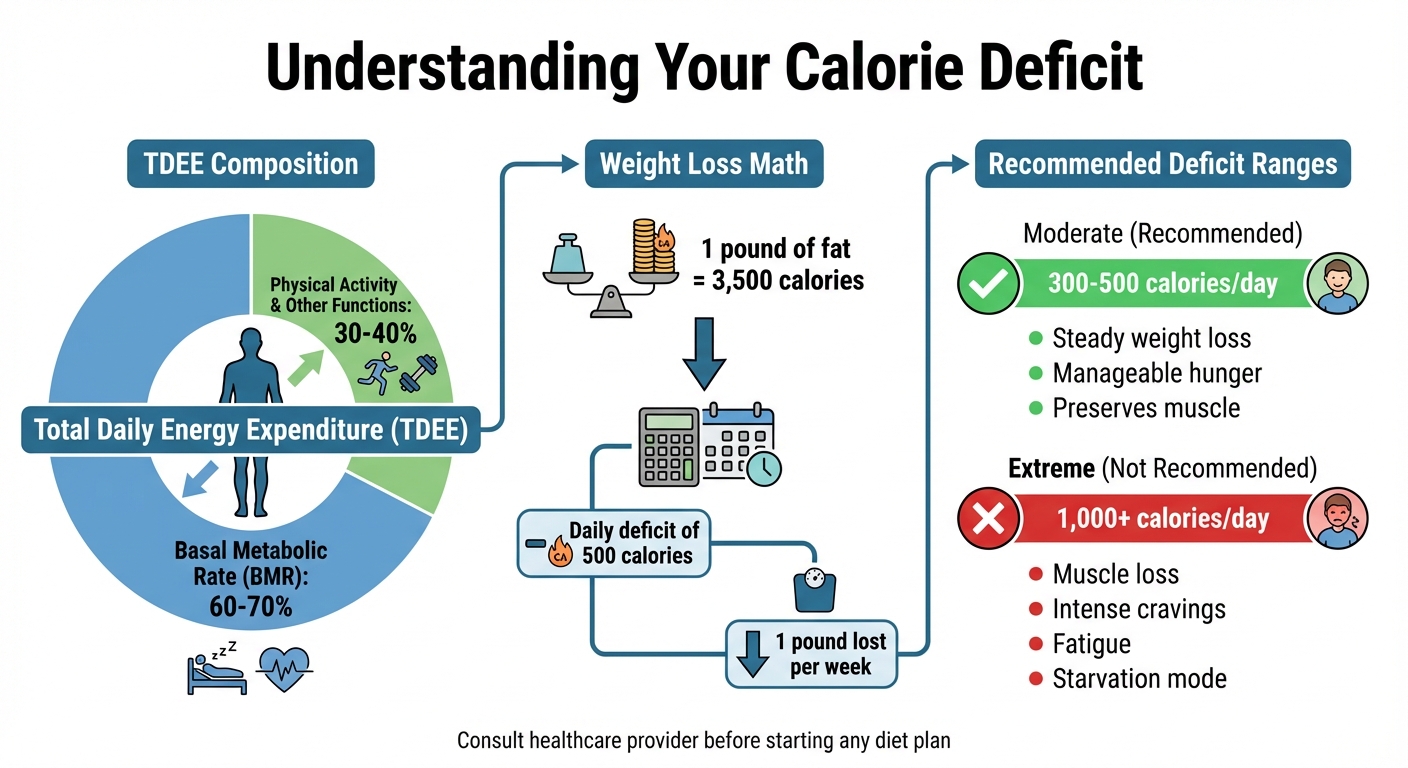
Calorie Deficit Breakdown: TDEE, BMR, and Weekly Weight Loss Calculator
What Is a Calorie Deficit?
A calorie deficit happens when you consume fewer calories than your body burns in a day. Your daily energy needs, known as Total Daily Energy Expenditure (TDEE), include everything from basic bodily functions to physical activity. The largest portion of TDEE - about 60–70% - comes from your Basal Metabolic Rate (BMR), which is the energy your body uses at rest.
When you consistently eat fewer calories than your TDEE, your body starts using stored fat for energy. Since one pound of fat equals roughly 3,500 calories, creating a daily deficit of 500 calories can lead to a weight loss of about one pound per week.
"If you want to lose weight with a calorie deficit, I suggest tracking what you're currently eating before making any changes. It's good to understand your starting point."
This advice from Beth Czerwony, a Registered Dietitian at Cleveland Clinic, highlights the importance of knowing your baseline before adjusting your diet.
The size of your calorie reduction plays a big role in your success. A moderate cut of 300–500 calories per day is often more manageable, helping you lose weight steadily while keeping hunger in check and preserving muscle mass. On the other hand, slashing more than 1,000 calories daily can lead to muscle loss, intense cravings, and fatigue. As Czerwony explains:
"You have to go into calorie deficit just enough to get your body to use fat stores but not go into starvation mode where you start burning muscle mass."
Why Flavor Matters for Long-Term Success
While understanding calorie deficits is important, enjoying your food is just as crucial for sticking to your plan over time. Many diets fail not because of the math, but because the food feels uninspiring. When meals are bland or repetitive, it becomes harder to stay committed, and cravings often take over.
Tasty meals make it much easier to stick to your calorie goals. When you enjoy what you eat, it feels less like a chore and more like a lifestyle. The good news? Flavor doesn’t have to come at the expense of calories. By using creative techniques and ingredients, you can make meals both delicious and low-calorie. Simple additions like fresh herbs, spices, or a squeeze of lemon juice can elevate a dish without adding many calories. Cooking methods like roasting, grilling, or toasting can also bring out natural flavors.
Texture plays a big role, too. Pairing crunchy veggies with creamy sauces or tender proteins with tangy toppings keeps meals interesting and satisfying. Umami-rich ingredients, such as mushrooms, roasted tomatoes, or nutritional yeast, can add a savory depth that tricks your brain into feeling more satisfied. These small tweaks help curb cravings and make it easier to stay on track.
With flavorful, balanced meals, the calorie deficit becomes less of a struggle and more of a sustainable approach to eating. These principles set the stage for creative, low-calorie recipes and meal prep ideas that can make your journey enjoyable and effective.
sbb-itb-f97e3b5
Low-Calorie Ingredient Swaps That Add Flavor
You don’t have to sacrifice flavor to maintain a calorie deficit. These smart ingredient swaps let you enjoy delicious, gourmet meals while keeping calories in check.
Replace High-Calorie Bases with Lighter Options
Want creamy textures without the calorie overload? Try plain Greek yogurt as a substitute for sour cream, mayonnaise, or heavy cream. It brings tanginess, a protein boost, and no fat. For example, swapping Greek yogurt into tuna or chicken salad can save around 80 calories per tablespoon.
Pureed vegetables are another great alternative to butter or cream in sauces. Steam cauliflower and blend it with vegetable broth and garlic for a low-calorie Alfredo sauce. A half-cup of this version has only 80 calories and 2 grams of fat, compared to the traditional 220 calories and 22 grams of fat. Butternut squash works just as well. Even white beans blended into sauces can add creaminess, fiber, and protein without the extra calories.
For sautéing, replace regular butter with light butter mixed with vegetable broth. Add garlic, fresh herbs, or citrus zest to amplify the flavor. Need to thicken a sauce? Skip the heavy cream and dissolve cornstarch or arrowroot powder in cold water or broth for a silky texture with barely any calories.
Add Flavor with Herbs, Spices, and Acids
You can pack a punch of flavor without adding calories by using herbs, spices, and acids. Fresh herbs like basil, thyme, rosemary, and cilantro, or spices like smoked paprika, cumin, and garlic powder, bring complexity and depth to any dish.
Acidic ingredients like lemon, lime, or apple cider vinegar brighten flavors without adding fat. For a quick, healthier dressing, combine one tablespoon of extra virgin olive oil with fresh lemon juice and your favorite herbs. This mix avoids the hidden sugars often found in commercial fat-free dressings. For a savory, umami kick, try nutritional yeast, mushrooms, or tomato paste.
These swaps not only cut calories but also set the stage for versatile recipes and meal prep ideas coming up in the next sections.
Recipe Ideas for Flavorful, Low-Calorie Meals
Breakfast Recipes with Flavor
Start your day with Honey Sriracha Avocado Toast, a quick 10-minute recipe that turns a simple breakfast into a flavor-packed experience. Mash avocado with Hot Honey Sriracha sauce, lime juice, salt, and pepper, then layer it with hard-boiled eggs and cherry tomatoes. This combination brings together creamy, spicy, and tangy notes without relying on higher-calorie spreads like butter or cream cheese.
For a protein-packed option, try egg white scrambles enhanced with a drizzle of Spicy Garlic Parm sauce. At just 10 calories per serving, this sauce adds a bold, savory twist. Another great choice is shakshuka, a dish of poached eggs in a rich tomato sauce seasoned with garlic, cumin, and paprika. The tomato base keeps the calorie count in check while delivering deep, satisfying flavors. Research even suggests that high-protein breakfasts like these can help you eat up to 135 fewer calories later in the day. With these vibrant breakfast ideas, you’re set to enjoy equally flavorful meals throughout the day.
Lunch and Dinner Ideas That Satisfy
For a hearty yet healthy main, try Grilled Chicken with Cherry Smoked BBQ Sauce. This sauce, with only 10 calories per 2-tablespoon serving, offers a smoky-sweet flavor without the sugar overload of traditional BBQ sauces, which often have 50–70 calories per serving. Use it as a marinade or brush it on during the final minutes of grilling for maximum flavor.
Pair your protein with roasted vegetables for a nutrient-packed side. Toss cauliflower or broccoli florets with Sweet Honey Mustard or Buffalo Blue Cheese sauce and roast them at 425°F until crispy. These sauces add a punch of flavor without piling on calories. And for taco night, consider swapping full-fat sour cream for a lighter alternative to keep your meal satisfying yet calorie-conscious.
Snacks and Side Dishes
Craving a snack? Whip up Buffalo Chicken Dip using nonfat Greek yogurt and whipped cream cheese. At just 88 calories and 3 grams of fat per 1/4-cup serving, it also packs up to 12 grams of protein. Pair it with crunchy jicama slices, cucumber rounds, or bell pepper strips instead of chips for a high-volume, low-calorie option.
For something crispy, try Crispy Cauliflower Bites, which come in at around 120 calories per serving when baked with minimal olive oil. The trick is to pat the florets completely dry before roasting to ensure they crisp up rather than steam. Serve with a yogurt-based garlic dipping sauce for added flavor.
Another satisfying option is Baked Sweet Potato Rounds. Slice sweet potatoes thin, bake them at 400°F, and enjoy their natural sweetness and crunch. They’re a healthier alternative to regular fries and make a perfect addition to your snack lineup. With these ideas, you can enjoy exciting, low-calorie meals and snacks all day long while staying on track with your goals.
Meal Prep Tips for Staying on Track
Batch Cooking with Low-Calorie Sauces
Tired of eating the same bland meals every day? Batch cooking with versatile, low-calorie sauces can keep your taste buds happy all week long. Start by grilling 2–3 pounds of chicken breast on Sunday. This gives you a blank canvas to create different meals. Pair one portion with Cherry Smoked BBQ sauce for a smoky, barbecue-inspired dinner. Use another with Buffalo Blue Cheese for a zesty lunch, and try Sweet Honey Mustard as a tangy topping for your salad.
For vegetables, skip boiling, which tends to drain flavor. Instead, roast them at 425°F to bring out their natural sweetness. Toss roasted cauliflower or Brussels sprouts with Spicy Garlic Parm sauce before storing to lock in bold flavors. Prefer sautéing? Use vegetable broth instead of oil to keep it lighter while maintaining moisture.
Want your lean meats to stay juicy and flavorful after reheating? Marinate them with citrus and low-calorie sauces. A simple mix of lime juice and Hot Honey Sriracha, for instance, adds a kick without the extra 140 calories per serving you’d get from ranch dressing. With proteins and vegetables prepped and flavored, assembling meals during the week becomes a breeze.
Organizing Ingredients for Quick Meals
A little organization can go a long way in making meal prep both efficient and enjoyable. Dedicate some time on Sunday to pre-chop vegetables and store them in clear containers. This way, you can quickly see what’s available. Keep raw veggies like bell peppers, cucumbers, and jicama ready to pair with smooth, low-calorie sauces. The combination of crunchy textures and rich flavors makes meals more satisfying and helps prevent overeating.
Portion out your proteins as soon as they’re cooked, and label each container with the date and contents to stay on top of freshness. Stock your fridge with Taste Flavor Co’s low-calorie sauces - each serving is just 10 calories but packs a punch of flavor. Having a variety on hand makes it easy to mix and match depending on your mood. For an extra flavor boost, add a splash of fresh lemon juice or a sprinkle of lime zest to your prepped meals just before eating. These small touches can make every bite feel fresh and exciting.
Conclusion
A calorie deficit doesn’t have to mean dull, flavorless meals. With a few smart swaps and creative cooking techniques, you can enjoy satisfying dishes while staying on track.
The trick is to prepare meals you’re excited to eat. Layering flavors with fresh herbs, spices, and citrus zest, or roasting vegetables at 425°F to bring out their natural sweetness, can elevate any dish. Low-calorie sauces, like those from Taste Flavor Co., are another game-changer - just 10 calories per serving can transform simple proteins and veggies into bold, flavorful meals.
Experiment with ingredient swaps and recipes, and try sauces like Hot Honey Sriracha or Spicy Garlic Parm to add a kick. When meals are enjoyable, sticking to your health goals becomes much easier. Eating well should feel satisfying, not restrictive, and every bite can be packed with flavor.
FAQs
How big should my calorie deficit be?
A daily calorie deficit of 500 to 1,000 calories can lead to a weight loss of about 1 to 2 pounds per week. This approach is generally regarded as a safe and manageable way to lose weight for most individuals. However, it’s always a good idea to check with a healthcare provider to figure out what’s best for your specific situation.
How can I make meals taste better without adding calories?
You can add a burst of flavor to your meals without increasing the calorie count by using healthy, low-calorie sauces. Quick-to-make options like creamy tahini, chimichurri, or a Greek yogurt herb sauce can be whipped up in just a few minutes. These sauces work wonders when paired with roasted vegetables, grain bowls, or wraps, bringing variety and taste to your dishes while keeping things light.
Another bonus? Making your own sauces gives you complete control over the ingredients and flavors, allowing you to tailor them to your personal taste.
What are the easiest meal prep shortcuts for staying consistent?
Batch cooking sauces and storing them ahead of time - either in the fridge or freezer - can make meal prep a breeze. This simple step means you’ll have flavorful options ready to go for quick meals all week long. Another time-saver? Opt for low-calorie or keto-friendly sauces from reliable brands. They not only simplify your cooking routine but also help you stick to your dietary goals without sacrificing taste.