


10 Low-Calorie Sauces for Roasted Vegetables
Roasted vegetables are delicious, but the right sauce can take them to the next level. This list features 10 low-calorie sauces, each under 25 calories per serving, that add flavor without compromising your health goals. From tangy mustards to creamy tahini, these sauces are perfect for pairing with veggies like broccoli, cauliflower, carrots, and more. Here's a quick overview:
- Spicy Garlic Parm: Cheesy with a kick, perfect for broccoli or Brussels sprouts (10 cal/tbsp).
- Hot Honey Sriracha: Sweet heat for carrots and sweet potatoes (15 cal/tbsp).
- Buffalo Blue Cheese: Tangy and creamy, ideal for cauliflower (5 cal/tbsp).
- Sweet Honey Mustard: Mild and tangy, great for root vegetables (10 cal/tbsp).
- Cherry Smoked BBQ: Smoky and sweet, pairs with mushrooms and peppers (10 cal/2 tbsp).
- Tahini Lemon: Nutty and citrusy, complements cauliflower and carrots (89 cal/2 tbsp).
- Herb Blend: Fresh and zesty, works with asparagus and green beans (15-20 cal/tbsp).
- Herbed Mustard: Tangy with herbs, perfect for Brussels sprouts (10-15 cal/tbsp).
- Garlic Tomato: Savory and garlicky, great for zucchini and eggplant (20-25 cal/2 tbsp).
- Curry Spice: Warm and aromatic, best for broccoli and potatoes (23 cal/tbsp).
Each sauce is easy to make, gluten-free, and many are vegan or keto-friendly. Whether you prefer bold flavors, creamy textures, or tangy notes, these sauces offer a simple way to enhance your roasted vegetables while keeping calories low.
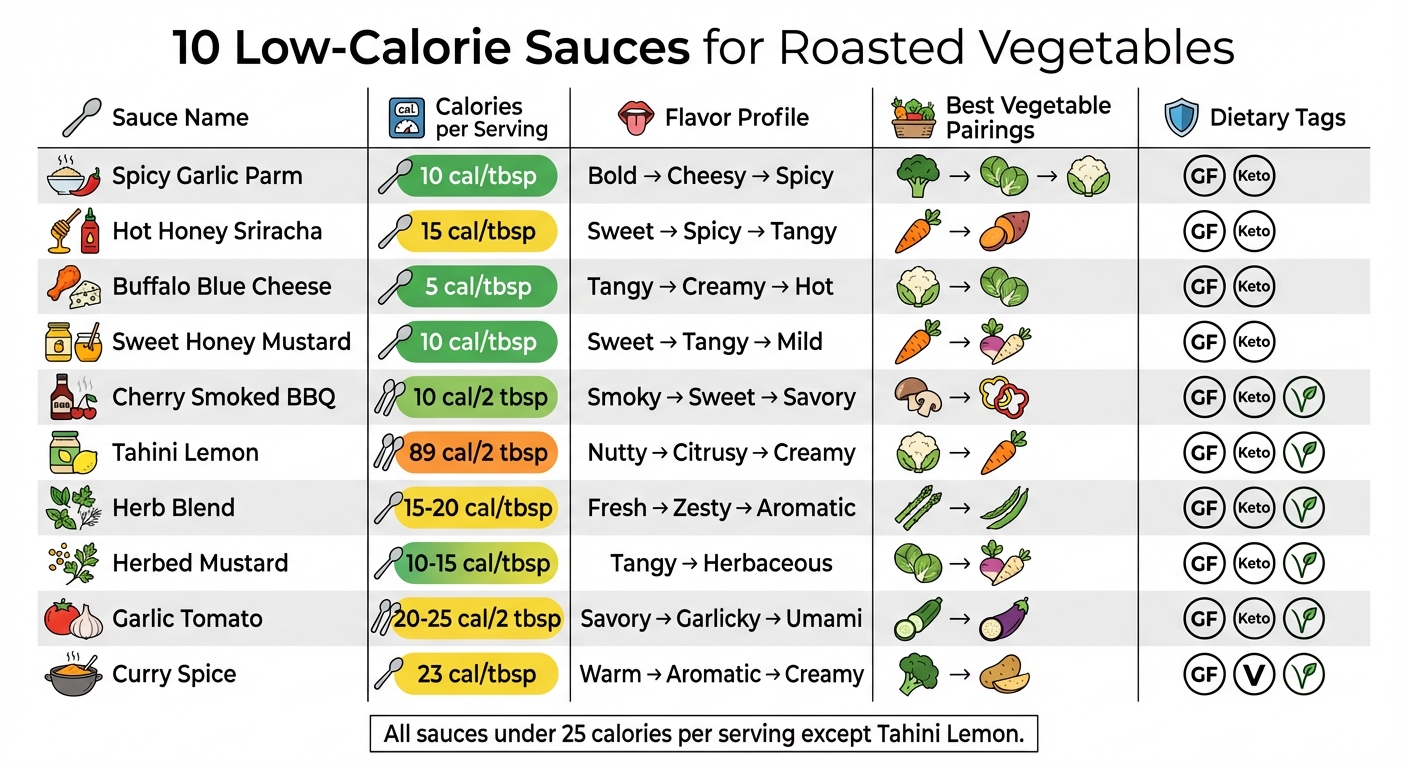
10 Low-Calorie Sauces for Roasted Vegetables: Calories, Flavors & Pairings
1. Spicy Garlic Parm
Flavor Profile
Spicy Garlic Parm packs a punch with its bold combination of savory garlic, Parmesan cheese, and a fiery blend of cayenne and red chili flakes. With a medium spice level rated at 6/10, it strikes a perfect balance between heat and creaminess. This sauce can transform simple roasted vegetables into dishes that taste like they came straight from a high-end restaurant.
Calories per Serving
A single tablespoon of Spicy Garlic Parm contains just 10 calories, with no fat or added sugar, and 140 mg of sodium. Compared to heavier, traditional sauces, this lighter option is a welcome change.
Best Vegetable Pairings
This sauce pairs especially well with cruciferous vegetables like broccoli, cauliflower, and Brussels sprouts, as their tight florets hold the sauce beautifully. It also complements the natural sweetness of roasted carrots, eggplant, and mushrooms. To get the most out of the flavor, drizzle the sauce over the vegetables right after roasting.
Dietary Suitability
Spicy Garlic Parm is both gluten-free and keto-friendly, making it a smart choice for low-carb diets. However, it’s not vegan due to the inclusion of Parmesan cheese. One satisfied customer, Patrick P., shared his thoughts:
"Make your dieting not feel like diet food. Best there is. I live on this during pre".
Stay tuned for another sauce that brings its own bold twist to roasted vegetables.
sbb-itb-f97e3b5
2. Hot Honey Sriracha
Flavor Profile
Hot Honey Sriracha combines a blend of U.S. honey, sriracha, garlic, onion, shiitake powder, red jalapeño mash, chile gochugaru, and cayenne. The result? A sweet heat that lands at a solid 6/10 on the spice scale. One satisfied customer, Robert K., shared his thoughts:
"Really nice sauce that has gone well with everything I've tried it on... Loads of flavour and just the right amount of kick to give it a tasty zing."
Now, let’s dive into its nutritional highlights.
Calories per Serving
Each tablespoon of Hot Honey Sriracha delivers bold flavor for just 15 calories. It contains 4 grams of total carbohydrates and 2 grams of added sugar - far less than typical hot honey sauces, which can reach up to 17 grams of added sugar per serving. Sodium content is also kept low at 70 mg per serving.
Best Vegetable Pairings
This sauce pairs beautifully with roasted winter vegetables. Think Brussels sprouts, sweet potatoes, baby potatoes, and butternut squash. The honey’s sweetness enhances the caramelized sugars in roasted carrots and potatoes, while its heat balances out the bitterness of greens like radicchio. To get the best results, roast your vegetables with oil and herbs first, then toss them in Hot Honey Sriracha after they’re browned - this prevents the sugars from burning. A splash of lemon juice or apple cider vinegar can add a bright, tangy touch to round out the flavors.
Dietary Suitability
Hot Honey Sriracha checks several boxes: it’s gluten-free, keto-friendly, and free of seed oils and artificial preservatives. However, it’s not vegan due to the use of real honey. With 211 reviews averaging 4.81 stars, its flavor and health-conscious profile have won over many fans. Tommy A., another happy customer, said:
"This sauces tastes great, its so nice to not have to trade flavor for unwanted calories!"
3. Buffalo Blue Cheese
Flavor Profile
Buffalo Blue Cheese is a tangy, creamy sauce that brings a bold twist to low-calorie options. Combining the heat of cayenne with the richness of blue cheese, it creates a flavor reminiscent of classic wing sauce. Made with blue cheese crumbles, apple cider vinegar, and garlic powder, this sauce hits a spice level of 7/10, making it a perfect balance of heat and tang. As one satisfied customer, Timothy L., shared:
"Just the right amount of heat and tang. I absolutely love the Buffalo Blue Cheese sauce."
Calories per Serving
With only 5 calories per tablespoon and 280 mg of sodium per serving, this low-fat, low-carb option allows you to indulge without guilt. You can drizzle it generously over roasted veggies while staying on track with your health goals. Its 4.73/5-star rating from 151 reviews highlights how customers love its rich flavor that doesn't compromise on taste, even with its low-calorie profile.
Best Vegetable Pairings
Cauliflower florets take center stage with this sauce, often earning the nickname "Buffalo Cauliflower" for their ability to absorb bold flavors while maintaining a hearty texture. For the best results, roast cauliflower at 450°F for 15–20 minutes until caramelized and tender, then toss it with the sauce to coat evenly without turning soggy.
Other great pairings include roasted Brussels sprouts and broccoli, which develop a delightful crispiness, as well as celery sticks and mixed roasted vegetables. A serving of roasted cauliflower with Buffalo Blue Cheese sauce (about 1 cup) contains approximately 132 calories, making it a flavorful and satisfying option for any meal.
Dietary Suitability
Buffalo Blue Cheese isn't just about bold flavor - it also caters to various dietary needs. This sauce is gluten-free, keto-friendly, and low-carb, with no seed oils or artificial preservatives. However, it’s not vegan due to its dairy content. Priced at $8.99 for a 9 oz bottle, it’s also available in customizable bundles starting at $25.95. Its simple ingredient list and calorie-conscious formula make it a favorite among those with dietary restrictions.
4. Sweet Honey Mustard
Sweet Honey Mustard is a gentler, flavorful option to elevate your roasted vegetables without overwhelming their natural taste.
Flavor Profile
This sauce blends natural U.S. honey sweetness with the tanginess of yellow or Dijon mustard, rounded out by savory hints of garlic and onion powder. It enhances roasted vegetables by creating a slightly caramelized exterior and softening their flavors, making even nutrient-packed greens more appealing. With a 0/10 spice level, it’s perfect for those who favor mild sauces. As customer Molly noted:
"For me, the tangy notes are more prominent than the sweet. It is still really good though and works awesome for chicken! And for the low calories, you can't beat it!"
Calories per Serving
At only 10 calories per tablespoon, Sweet Honey Mustard is a low-calorie choice that doesn’t skimp on flavor. It contains 2 g of carbohydrates and 220 mg of sodium per serving, offering 66% fewer calories and 71% fewer carbs than typical alternatives. When paired with roasted vegetables, a serving comes to about 242 calories. Priced at $8.99 for a 9 oz bottle, it has received an impressive 4.84-star rating from 268 reviews. Bundle options start at $25.95 for more variety.
Best Vegetable Pairings
This sauce shines with hearty vegetables that complement its bold yet balanced flavor. Root vegetables like carrots, sweet potatoes, and parsnips pair beautifully with the honey’s sweetness. Meanwhile, cruciferous vegetables such as broccoli, cauliflower, and Brussels sprouts hold the sauce well in their natural crevices. Other great choices include red peppers, zucchini, and onions, as roasting mellows their flavors and balances the mustard’s tang. For the best results, spread vegetables in a single layer on a baking sheet and toss them with the sauce while still warm to lock in the flavor.
Dietary Suitability
Sweet Honey Mustard is gluten-free, keto-friendly, fat-free, and free of seed oils or artificial preservatives. However, it’s not vegan due to the inclusion of real honey - maple syrup works as a vegan substitute. Its straightforward ingredient list includes water, yellow mustard, honey, salt, food starch, garlic powder, onion powder, and sucralose, making it a nut-free option that fits various dietary needs.
5. Cherry Smoked BBQ
Let’s dive into the Cherry Smoked BBQ sauce - an option that brings a fruity, smoky twist to your roasted veggies without adding unnecessary calories. Taste Flavor Co's Cherry Smoked BBQ delivers a sweet, smoky, and tangy kick, making it a standout addition to your vegetable dishes.
Flavor Profile
This sauce combines tart cherries with classic southern BBQ smokiness, creating a sweet and tangy blend that’s rich in flavor but mild on spice. With a spice rating of 0/10, it’s perfect for those who want depth without heat. Plus, it contains 0g of added sugar, a stark contrast to the 16g typically found in standard BBQ sauces.
As personal trainer Raymond J. put it:
"The flavor and the seasoning and what heat there is, is so well mixed, you won't have to think about another bite! Your body will want it so bad, you will eat up your food like a madman!"
Calories per Serving
Each 2-tablespoon serving packs only 10 calories, with 2g of total carbohydrates and 280mg of sodium. A single 9 oz bottle provides around 17 servings and costs $8.99, while bundle deals start at $25.95. With a glowing 4.88-star rating from 598 reviews, it’s clearly a crowd favorite.
Best Vegetable Pairings
The sweet and smoky notes of this sauce shine when paired with hearty root vegetables like carrots, potatoes, and sweet potatoes. It also works beautifully with mushrooms, eggplant, onions, and bell peppers. For the best results, brush it onto your veggies during the last few minutes of roasting to avoid burning.
Dietary Suitability
Cherry Smoked BBQ is designed to meet a variety of dietary needs. It’s gluten-free, vegan, and keto-friendly. The ingredient list includes water, white vinegar, tomato paste, starch, salt, mustard flour, onion powder, chili powder, garlic powder, black pepper, cherries, and sucralose. This ensures a rich BBQ flavor without added sugars, oils, or preservatives.
6. Tahini Lemon
If you’re after a creamy, nutty sauce that brings roasted vegetables to life, tahini lemon might just be your new favorite. This sauce, inspired by Middle Eastern flavors, blends rich sesame paste with zesty lemon juice and a touch of garlic, creating a versatile drizzle that complements a variety of veggies.
Flavor Profile
Tahini lemon sauce strikes a perfect balance of flavors. The sesame paste offers a deep, nutty richness, while the lemon juice adds brightness and cuts through the heaviness. A hint of garlic gives it a savory kick. Liz Della Croce of The Lemon Bowl describes it best:
"The tahini sauce is nutty and rich in flavor, while being light and creamy".
You can tweak the consistency to suit your dish - keep it thick for dipping or thin it out with water or lemon juice for a pourable sauce. Despite its luxurious taste, it’s surprisingly low in calories.
Calories per Serving
One serving of tahini lemon sauce contains about 66 calories. Pair it with roasted vegetables like cauliflower or sweet potatoes, and the whole dish comes to just 123 calories. Beyond being light, it’s packed with heart-healthy unsaturated fats, plant-based protein, and essential minerals, making it as nutritious as it is delicious.
Best Vegetable Pairings
This sauce is a natural match for vegetables with sweet or earthy flavors. It pairs beautifully with cauliflower, sweet potatoes, carrots, and parsnips, enhancing their sweetness with its nutty and tangy notes. Cruciferous vegetables like broccoli, Brussels sprouts, and cabbage also shine when topped with tahini lemon. For something different, try it over roasted butternut squash or massaged into kale to mellow out its robust texture.
Dietary Suitability
Tahini lemon sauce checks all the boxes for those following specific diets. It’s vegan, gluten-free, dairy-free, and entirely plant-based. The creamy texture comes from sesame paste, eliminating the need for dairy or added oils, making it a great choice for oil-free diets. Stored in an airtight container in the fridge, it stays fresh for up to 7 days.
7. Herb Blend
This low-calorie sauce is a game-changer for roasted vegetables, turning simple ingredients into something special without piling on extra calories. Packed with fresh herbs, the herb blend sauce adds a burst of bright, zesty flavors that complement roasted vegetables beautifully. It combines parsley, basil, mint, and chives with lemon juice and zest for a tangy, refreshing kick. Some variations even include a touch of sweetness from pitted dates to balance the acidity, creating a well-rounded taste. Let’s dive into its flavor profile, calorie details, vegetable pairings, and dietary benefits.
Flavor Profile
The herb blend delivers a fresh, vibrant taste that enhances the natural sweetness of roasted vegetables. Unlike heavier, creamy sauces, this herb-and-oil combination is light, letting the roasted flavors shine through. As Janette, Founder of Culinary Ginger, explains:
"The sauce will bring out the true flavor of the veggies, no matter which ones you choose!"
For the best results, drizzle the sauce over your vegetables right after roasting to preserve the bright green color of the herbs and create a stunning presentation.
Calories per Serving
Adding herb blend sauce to your roasted vegetables keeps things light. A serving comes in at around 199 calories, with 17 g of fat and 13 g of carbohydrates. It’s a flavorful option that supports your health goals without feeling like a compromise.
Best Vegetable Pairings
This sauce works wonders with a variety of vegetables. Try it with asparagus, leeks, cauliflower, or carrots - their natural sweetness pairs perfectly with the lemony tang. It also complements the earthy, umami flavors of Brussels sprouts and mushrooms. For the best texture, cut your vegetables evenly and avoid covering them in the oven, as this can cause them to steam instead of roast. These pairings not only elevate flavor but also align with your wellness objectives.
Dietary Suitability
Herb blend sauce is a naturally vegan, gluten-free, and dairy-free option when made with just herbs, oil, and citrus. However, if you’re on a keto diet, watch out for versions that include dates, as they can add around 10 g of sugar per serving. While it can be prepared ahead of time, the sauce is best enjoyed fresh to maintain its vibrant color and flavor.
8. Herbed Mustard
Herbed mustard combines the sharp tang of Dijon mustard with the natural sweetness of maple syrup and the aromatic kick of herbs like tarragon, dill, or parsley. The result? A bold, tangy sauce with a touch of sweetness that works beautifully as a glaze or finishing drizzle for roasted vegetables. As Elizabeth Shah, Author and Recipe Developer, explains:
"This Dijon mustard sauce is one of those easy, go-to recipes you can count on to make just about any basic dish better."
Let’s dive into its flavor profile, calorie content, ideal veggie pairings, and dietary compatibility.
Flavor Profile
This sauce offers a tangy punch from Dijon mustard, balanced by the gentle sweetness of maple syrup. The addition of fresh herbs like tarragon introduces a subtle anise-like note, while dill and parsley provide lighter, versatile flavors. When tossed with hot roasted vegetables, the sauce clings to their surfaces, enhancing their nutty, earthy tones. Prefer something less intense? Swap out Dijon for brown mustard for a milder taste.
Calories per Serving
A 2-tablespoon serving of herbed mustard contains 69 calories, 10g of naturally sourced sugar, and 238mg of sodium.
Best Vegetable Pairings
This sauce pairs exceptionally well with hearty root vegetables like fingerling potatoes, carrots, and beets, as their earthy sweetness complements the mustard's tang. It also works wonders with cruciferous options like Brussels sprouts, broccoli, and cauliflower, as well as creamy-textured summer squashes like butternut and zucchini. For the best results, preheat your baking sheet to 450°F to maximize caramelization, and toss the vegetables in the sauce while they’re still warm from the oven.
Dietary Suitability
Herbed mustard is naturally gluten-free and can easily be made vegan by substituting maple syrup for honey. It’s also free of dairy, soy, and nuts, making it a versatile choice for various dietary restrictions. For those on a keto diet, low-calorie commercial versions often feature zero added sugars and about 2g of carbs per serving. Homemade versions typically stay fresh in the fridge for 3–4 days.
9. Garlic Tomato
Garlic tomato sauce brings a touch of Mediterranean charm with its blend of Roma tomatoes, golden garlic, fragrant oregano, and fresh basil. This classic sauce adds a bright, tangy kick that enhances the rich, roasted flavors of vegetables. Whether served chunky for a rustic feel or blended into a smooth puree, this sauce creates a flavorful foundation for a variety of dishes.
Flavor Profile
The sauce combines the savory depth of roasted tomatoes and garlic with the aromatic lift of fresh herbs, creating a tangy, hearty finish that’s hard to resist. Roasting the ingredients intensifies their natural sweetness and adds a complexity that raw or simmered versions simply can’t match. Some recipes include balsamic vinegar or red wine for a smoky, tangy twist that pairs wonderfully with the charred edges of roasted vegetables. The recipe can be easily adjusted to suit your taste, making it a versatile addition to any meal.
Calories per Serving
A standard serving (about 280g) of this homemade roasted tomato and garlic sauce contains 154 calories, along with 10.7g of fat, 499mg of sodium, and 15.2g of carbohydrates.
Best Vegetable Pairings
This sauce pairs beautifully with eggplant, bell peppers, mushrooms, and onions. Eggplant soaks up the savory tomato and garlic flavors, while the natural sweetness of bell peppers balances the sauce's acidity. Mushrooms add an earthy, umami-rich contrast, and caramelized onions echo the sweetness of roasted tomatoes. Other great options include broccoli florets, zucchini, and portobello mushrooms, all of which complement the sauce’s tangy warmth.
Dietary Suitability
Garlic tomato sauce is naturally vegan and gluten-free, made with simple ingredients like olive oil and fresh produce. It’s also soy-free and nut-free when thickened with coconut cream or a bean-based alternative. Beyond its flavor, the sauce is a good source of Vitamin A, Vitamin C, and Potassium. For the best results, roast a whole bulb of garlic and cherry tomatoes at 400°F for 25–30 minutes, until the garlic is soft and the tomatoes are blistered.
10. Curry Spice
Curry Spice wraps up our list with bold flavors and a mere 23 calories per tablespoon. Built around curry powder, turmeric, and cumin, this sauce offers a rich, aromatic experience with a creamy texture. Lime juice adds a tangy edge, while garlic and ginger bring savory depth to the mix.
Flavor Profile
This sauce balances warmth and brightness effortlessly. The earthy, aromatic notes from curry powder and turmeric are lifted by the sharp, refreshing kick of citrus. It pairs beautifully with the nutty, caramelized flavors of roasted vegetables. A base of yogurt or mayonnaise ensures a creamy richness that doesn’t overpower, and letting the sauce rest for about 30 minutes allows the spices to meld and deepen their flavor.
Calories per Serving
A lighter version, made by blending mayonnaise with plain yogurt, clocks in at about 23 calories per tablespoon.
Best Vegetable Pairings
Broccoli and cauliflower shine with this sauce, as their porous textures soak up the spices and creamy richness. Root vegetables like roasted potatoes and carrots enhance the curry's warmth with their natural sweetness, while asparagus and kale offer a crispy contrast. For the ultimate flavor boost, try seasoning your vegetables with dry curry powder and cumin before roasting. This ensures every bite is perfectly spiced and crisp.
Dietary Suitability
Curry Spice sauce is naturally gluten-free, making it a safe choice for those avoiding wheat. Most versions are vegetarian, and it’s easy to adapt the recipe for a vegan diet by swapping in plant-based options like Vegenaise or dairy-free yogurt. Adding a half-teaspoon of turmeric not only enhances the sauce’s vibrant yellow hue but also gives it a nutritional boost.
Sauce Comparison Table
After diving into the details of each sauce, check out the table below to compare their flavor profiles, calorie counts, and dietary compatibility. These sauces are designed to amplify the natural taste of roasted vegetables while keeping the calorie count in check.
| Sauce Name | Calories per Serving | Flavor Type | Veggie Pairings | Dietary Options |
|---|---|---|---|---|
| Spicy Garlic Parm | 10 calories (1 tbsp) | Bold, zesty, cheesy with heat | Cauliflower, broccoli, zucchini | Gluten-free, Keto |
| Hot Honey Sriracha | 10 calories (1 tbsp) | Sweet and spicy balance | Carrots, Brussels sprouts, corn | Gluten-free, Keto |
| Buffalo Blue Cheese | 10 calories (1 tbsp) | Tangy, creamy heat | Cauliflower, root vegetables, celery | Gluten-free, Keto |
| Sweet Honey Mustard | 10 calories (1 tbsp) | Sweet and tangy | Roasted potatoes, carrots, parsnips | Gluten-free, Keto |
| Cherry Smoked BBQ | 10 calories (2 tbsp) | Smoky, sweet, savory | Bell peppers, onions, mushrooms | Gluten-free, Keto |
| Tahini Lemon | 89 calories (2 tbsp) | Nutty, bright, citrusy | Roasted cauliflower, eggplant, carrots | Gluten-free, Keto, Vegan |
| Herb Blend | 15–20 calories (1 tbsp) | Fresh, aromatic, savory | Asparagus, green beans, tomatoes | Gluten-free, Keto, Vegan |
| Herbed Mustard | 10–15 calories (1 tbsp) | Tangy, herbaceous | Root vegetables, Brussels sprouts | Gluten-free, Keto, Vegan |
| Garlic Tomato | 20–25 calories (2 tbsp) | Savory, garlicky, umami | Zucchini, eggplant, bell peppers | Gluten-free, Keto, Vegan |
| Curry Spice | 23 calories (1 tbsp) | Warm, aromatic, creamy | Broccoli, cauliflower, potatoes, carrots | Gluten-free, Vegetarian, Vegan |
Note: Serving sizes differ - BBQ sauces use a 2-tablespoon serving, while others are measured per tablespoon. Sauces made with real cheese or honey are not vegan, but plant-based options like Tahini Lemon, Herb Blend, and Garlic Tomato are ideal for vegan diets.
Taste Flavor Co offers five of these sauces - Spicy Garlic Parm, Hot Honey Sriracha, Buffalo Blue Cheese, Sweet Honey Mustard, and Cherry Smoked BBQ - all at 10 calories or less per serving. These gluten-free, keto-friendly choices are crafted with real ingredients and contain no oils or preservatives.
Take a closer look at the details to find the perfect sauce for your flavor and dietary needs.
Conclusion
Our 10 low-calorie sauces do more than just add flavor to roasted vegetables - they help make healthy eating enjoyable and sustainable. As Manuel Villacorta, MS, RDN, explains:
"People don't fall off track because they're hungry - they fall off because their meals stop being enjoyable".
Adding a flavorful sauce ensures your meals stay exciting, which is key to sticking with your healthy eating goals.
By opting for homemade or thoughtfully prepared sauces, you can avoid the hidden calories and additives often found in store-bought options, like high-fructose corn syrup and excess oils. These low-calorie sauces pack bold flavors with clean ingredients, offering just 10 calories or less per serving - without oils or preservatives. That means you can enjoy a boost of flavor without compromising your health goals.
Having a variety of sauces on hand also keeps meal prep interesting. Switching up the sauces throughout the week gives each meal a fresh twist. Imagine roasted carrots with the tangy Sweet Honey Mustard one night, followed by cauliflower drizzled with Buffalo Blue Cheese the next. This simple strategy transforms healthy eating from feeling restrictive to something you genuinely look forward to.
Don’t hesitate to experiment with different combinations to discover your favorites. Toss warm vegetables with vinaigrettes to let them soak up the flavors, or serve herb-based sauces on the side to keep their vibrant color and taste intact. Keeping a few go-to sauces ready ensures you can effortlessly turn plain roasted vegetables into dishes that are both delicious and satisfying.
FAQs
Which sauce is best for my diet (keto, vegan, gluten-free)?
The right sauce for your diet depends on your personal preferences and nutritional goals. Taste Flavor Co offers a range of low-calorie sauces that cater to different dietary needs. Their lineup includes options like Cherry Smoked BBQ, Spicy Garlic Parm, and Hot Honey Sriracha - all designed to be keto-friendly, vegan, and gluten-free. These sauces add a burst of flavor while aligning with various lifestyle choices.
When should I add sauce so it doesn’t burn in the oven?
To keep your sauce from burning, apply it during the final 10–15 minutes of roasting, especially when the oven is set to 400°F. This is particularly important for sauces containing sugar or honey, as they can scorch if used too early. Adding the sauce near the end gives it enough time to caramelize beautifully without developing a bitter taste.
How long do these sauces last in the fridge?
These sauces usually remain fresh in the fridge for 1 to 2 weeks when kept in an airtight container. Before using, always inspect for any changes in smell, texture, or appearance to ensure they’re still good.