


What Makes a Good Diet-Friendly Sauce?
A diet-friendly sauce should be low in calories, made with whole ingredients, and provide balanced nutrients. Most store-bought sauces are loaded with added sugar, refined oils, and sodium, which can derail your health goals. However, modern options and homemade recipes can enhance flavor while supporting your diet.
Key Takeaways:
- Calories: Look for sauces with 10–15 calories per serving.
- Sugar & Sodium: Less than 3g of added sugar and low sodium content are ideal.
- Ingredients: Opt for real, whole foods like Greek yogurt, avocado, or coconut aminos.
- Macronutrients: Prioritize sauces with some protein or healthy fats.
- Diet-Specific Options: Keto, gluten-free, and vegan-friendly ingredients like tamari, nutritional yeast, and cashews work well.
Small changes, like choosing better sauces, can make healthy eating sustainable and flavorful.
Why Traditional Sauces Don't Work for Healthy Eating
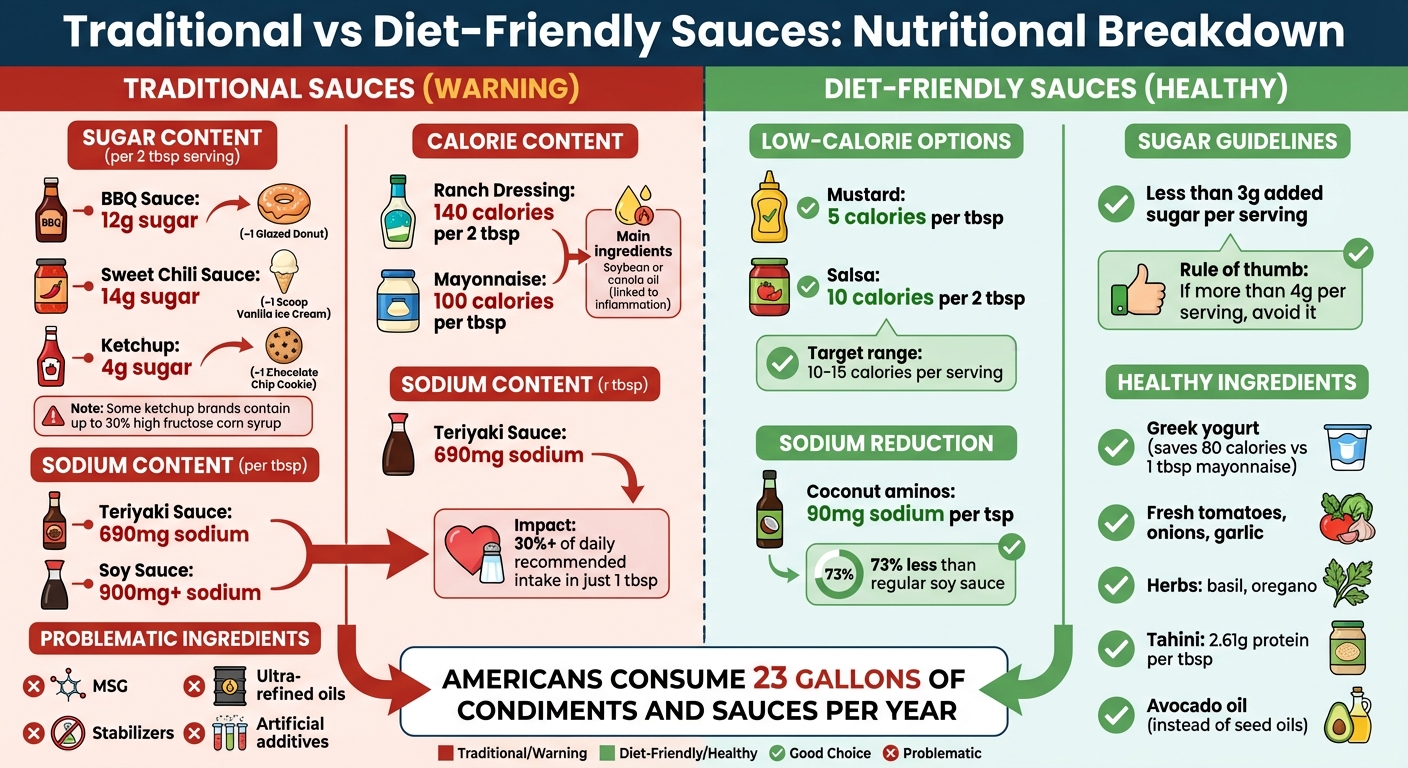
Traditional vs Diet-Friendly Sauces: Nutritional Comparison
Too Many Calories and Sugar
Take a stroll down the grocery store aisle, and you'll find a lineup of sauces that can throw your healthy eating goals off track. On average, Americans consume a staggering 23 gallons of condiments and sauces each year. The problem? Many of these are packed with refined sugars and high fructose corn syrup.
Here’s the reality: a mere 2-tablespoon serving of popular sauces like BBQ sauce, ketchup, or sweet chili sauce can deliver 12g, 4g, or 14g of sugar, respectively. To put that in perspective, that's about the same sugar content as a glazed donut, a chocolate chip cookie, or a scoop of vanilla ice cream. Some ketchup brands are made up of as much as 30% high fructose corn syrup.
Creamy sauces aren't any better. Ranch dressing and mayo can pack 140 calories per 2 tablespoons and up to 100 calories per tablespoon, mostly from oils like soybean or canola, which are linked to inflammation. And those "fat-free" versions? They often swap out fat for added sugar and chemical stabilizers, defeating the purpose if you're aiming for weight loss.
"You don't have to eat dry chicken and plain lettuce to be healthy... Check the sugar: If it has more than 4g per serving, put it back." - Ant Real, Founder, SwapHealthy
And it’s not just the sugar. Many of these sauces sneak in extra sodium and artificial ingredients that further disrupt your diet.
High Sodium and Artificial Ingredients
While sugar gets a lot of attention, sodium is another hidden culprit in traditional sauces. A single tablespoon of teriyaki or soy sauce can pack in 690mg to over 900mg of sodium - easily hitting 30% or more of your daily recommended intake. This high sodium load can lead to inflammation and make it harder to maintain a balanced diet.
Then there are the artificial additives. Many store-bought sauces rely on MSG, stabilizers, and ultra-refined oils to maintain their texture and flavor. For instance, ranch dressing often contains MSG, while many mayonnaise and dressing labels list soybean or canola oil as the main ingredient. These oils add unnecessary calories without meaningful nutrients.
"Store-bought brands - even natural and organic food brands - often contain refined sugars, sodium, ultrarefined oils, additives, or all of the above." - Nichole Dandrea-Russert, MS, RDN, Food Revolution Network
The problem with these additives is that they strip away the nutritional benefits you'd get from whole-food alternatives. Take avocado oil-based dressings, for example. While they provide fat, they lack the fiber and vitamins E, C, and B6 you'd get from eating a whole avocado. The result? You’re left with empty calories that can spike blood sugar, promote inflammation, and make it harder to stay in a caloric deficit.
If you're serious about healthy eating, ditching traditional sauces in favor of options made with whole ingredients is a small change that can make a big difference.
sbb-itb-f97e3b5
What Makes a Sauce Diet-Friendly
For a sauce to be considered diet-friendly, it needs to do more than just cut calories - it should also provide balanced nutrients and use high-quality ingredients.
Low Calorie Count
A good diet-friendly sauce keeps the calorie count low, ideally around 10–15 calories per serving. This way, you can enjoy flavorful meals without worrying about exceeding your daily calorie limit. Take mustard, for example - some varieties contain just 5 calories per tablespoon. Salsa is another excellent choice, offering only 10 calories per 2-tablespoon serving. When you're sticking to a calorie deficit, these small differences can really add up.
But calories alone aren’t the full picture. The macronutrient profile is just as important.
Balanced Macronutrients
The best sauces balance their macronutrients by cutting back on added sugars and unhealthy fats while incorporating some protein or fiber. Look for options with less than 3 grams of added sugar per serving and those that use plant-based fats instead of refined oils. For instance, tahini is a great choice, providing 2.61 grams of protein per tablespoon thanks to its sesame seed base. Pesto, on the other hand, delivers healthy fats and zinc without packing in too many calories.
If you're watching your sodium intake, there are even coconut-based soy alternatives with just 90 milligrams of sodium per teaspoon - about 73% less than regular soy sauce - while still delivering that savory umami flavor.
Real, Whole Ingredients
A quick glance at the ingredient list can tell you a lot about a sauce's quality. Diet-friendly sauces are made from real, whole ingredients like fresh tomatoes, onions, garlic, herbs (such as basil and oregano), vinegars, yogurt, and spices. They avoid relying on heavy oils, preservatives, or high-fructose corn syrup.
These natural ingredients don’t just enhance flavor - they also offer health benefits. Tomatoes and peppers provide antioxidants, turmeric in mustard can reduce inflammation, and pesto delivers healthy fats that support overall well-being. Choosing sauces made with whole foods is a simple way to boost the nutritional value of your meals while staying on track with your health goals.
Best Ingredients for Healthy Sauces
Once you know what makes a sauce more diet-friendly, the next step is choosing the right ingredients. Whether you're making your own or picking out a store-bought option, these tips will help you make healthier choices.
Healthy Base Options
The base of a sauce plays a big role in its nutritional value. Greek yogurt is a fantastic option, offering five times the protein of sour cream and acting as a great substitute for mayonnaise. By swapping just one tablespoon of mayonnaise for plain Greek yogurt, you can save about 80 calories. For a dairy-free alternative, mashed avocado brings heart-healthy fats and a creamy texture. Balsamic vinegar is another excellent choice, as it contains polyphenol antioxidants that can help protect cells and support heart health. Fresh citrus juices, like lemon, add tang and brightness to vinaigrettes without adding calories. Pairing these juices with a tablespoon of extra virgin olive oil can also help your body absorb vitamins from leafy greens. These bases are a great starting point for creating flavorful, healthy sauces.
Ingredients That Add Flavor
Once you've picked a nutritious base, it's time to pack in the flavor with smart, low-calorie ingredients. Nutritional yeast is a great option for a cheesy flavor while also adding vitamin B12. For a savory kick, coconut aminos provide umami with 70% less sodium than soy sauce. Dry spices like garlic powder, onion powder, and dried dill bring bold flavors without extra calories. For example, mixing 1 cup of plain Greek yogurt with 1 tablespoon of lemon juice and 1 teaspoon each of dried dill, garlic powder, and onion powder creates a 20-calorie ranch dressing - a much lighter option than store-bought dressings. Want to add a unique twist? Try fresh ginger paste, sesame seeds, or toasted sesame oil for a rich flavor and anti-inflammatory benefits.
Ingredients for Specific Diets
If you're following a specific diet, there are ingredient swaps that can help you meet your goals. For keto or low-carb diets, use xanthan gum as a zero-carb thickener instead of cornstarch. Brown sugar substitutes, like erythritol-based blends, can caramelize sauces without spiking blood sugar - a keto-friendly teriyaki sauce made this way has just 1 gram of net carbs per 2-tablespoon serving. For those who are gluten-free, tamari or coconut aminos are great alternatives to soy sauce, offering the same umami flavor without the wheat. On low-sugar diets, try date paste or unsweetened apple butter for natural sweetness in BBQ sauces - standard BBQ sauces can pack 12 grams of sugar in just two tablespoons, about the same as a glazed donut. For vegan diets, avocado-based mayonnaise and sesame oil are excellent choices, delivering healthy fats and rich flavors without relying on traditional oils.
How to Add Flavor While Staying Healthy
You can amp up the flavor in your dishes without relying on butter, cream, or sugar. By using ingredients rich in umami and playing with textures, you can create sauces that taste indulgent while staying aligned with your health goals.
Using Umami and Tangy Flavors
Umami is the secret weapon for bold, savory flavors without piling on extra calories. This "meaty" flavor comes from glutamate, an amino acid found in fermented and aged foods. For example, dried shiitake mushrooms pack 1,060 mg of glutamate per 100g - 15 times more than fresh mushrooms. Adding a tablespoon of miso paste to your sauce can bring a salty, fermented depth that elevates the taste. Want to take it up a notch? Combine different umami-packed ingredients. Pairing glutamate-rich foods, like tomatoes, with inosinate-rich ingredients, such as anchovies, boosts the savory flavor exponentially.
For a tangy twist, brighten your dishes with a splash of lemon juice, apple cider vinegar, or a sprinkle of citrus zest. Citrus zest delivers an intense hit of flavor that helps reduce the need for added salt. You can also try a balsamic reduction for a touch of natural sweetness with less impact on blood sugar compared to white sugar. It’s a great way to add complexity to your sauces without compromising on health.
These flavor enhancers set the stage for sauces that not only taste great but also have satisfying textures.
Creating Texture Without Unhealthy Fats
You don’t need heavy cream or butter to achieve a smooth, creamy texture. Ingredients like blended cannellini beans or silken tofu can create a velvety base while adding protein and keeping saturated fat in check. For a "cheesy" alternative, blend steamed cauliflower or butternut squash with nutritional yeast and a hint of miso - this dairy-free option is loaded with fiber and umami depth. Another option is soaked cashews or sunflower seeds blended with water, which yield a rich, creamy consistency along with added nutrients.
"The key to creating rich, creamy homemade sauces is using plant-based ingredients that are rich in healthy fats - including cashews, sunflower seeds, tahini, avocado, nut or seed butters, tofu, and plant-based yogurts - as a base." - Nichole Dandrea-Russert, MS, RDN
For an extra layer of flavor, try adding a small amount of tahini or almond butter, which emulsify sauces while contributing heart-healthy fats. When adjusting the consistency, add liquids like water or broth gradually - just 1–2 tablespoons at a time - to avoid ending up with a sauce that’s too thin.
With these techniques, you can enjoy rich, flavorful sauces while keeping your meals healthy. Up next, see how these sauce ideas can fit seamlessly into your everyday cooking.
Taste Flavor Co Sauces: Low-Calorie Options for Every Diet
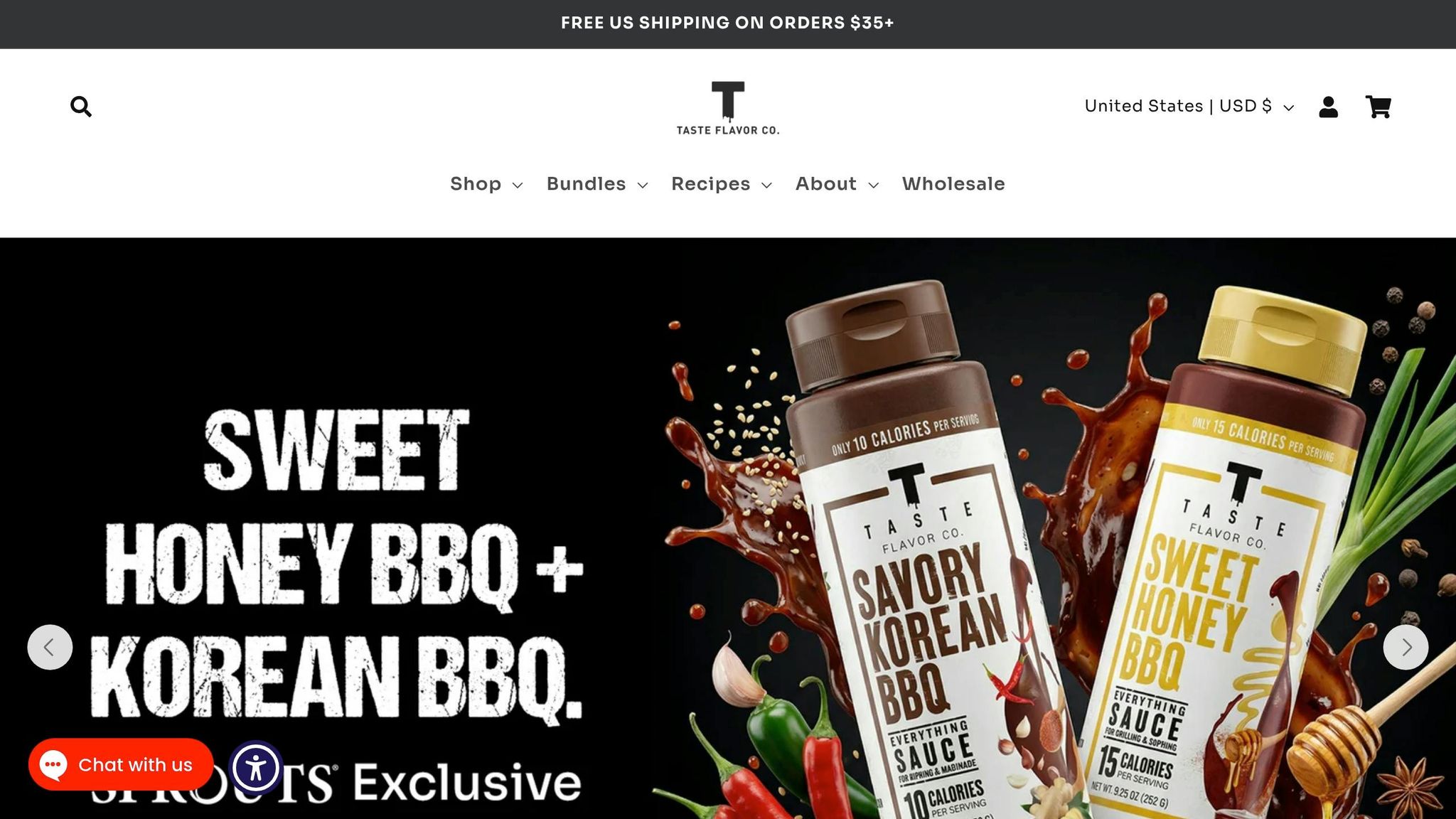
Taste Flavor Co has crafted a line of sauces that perfectly complement your health-focused lifestyle. These low-calorie, flavor-packed options deliver on taste while keeping your diet goals in check.
Product Features
Each sauce from Taste Flavor Co brings bold flavors with minimal calories - just 10 calories per serving, and the Buffalo Blue Cheese clocks in at only 5 calories. They're all gluten-free and keto-friendly, catering to a variety of dietary preferences. What sets these sauces apart is their use of real, high-quality ingredients instead of artificial fillers. For instance:
- Spicy Garlic Parm includes fresh parmesan cheese.
- Sweet Honey Mustard is sweetened with U.S. honey.
- Cherry Smoked BBQ uses real cherries for its rich flavor.
- Creamy Southwest Ranch swaps seed oils for avocado oil.
- Sesame Ginger Teriyaki features organic coconut aminos, offering a soy-free, lower-sodium alternative.
"We created lower-calorie but just-as-good versions of our favorite sauces so we can fuel our bodies with nutritious food, without depriving ourselves of delicious meals." – Taste Flavor Co
The brand’s commitment to quality shines through with over 1,069 five-star reviews. Their Fiery Mango Habanero sauce even earned the title of "Best Condiment 2025" at Sauce King NYC. With 80% fewer calories than traditional Southwest Ranch and 87% fewer calories than leading mango habanero sauces, these products prove you can enjoy delicious meals without straying from your health goals. Use them to marinate chicken, drizzle over veggies, or add 1–2 tablespoons to salads for a guilt-free flavor boost.
Bundle Options and Pricing
Taste Flavor Co offers flexible pricing and bundle options to suit your needs. Individual bottles start at $8.99, while bundles provide better value and variety. The "Build Your Bundle" option lets you mix and match 3–6 bottles, while the "Taste of Everything+" bundle includes six of their most popular flavors for $48.49, complete with free shipping.
| Bundle Name | Contents | Price (USD) | Key Benefits |
|---|---|---|---|
| Build Your Bundle | Custom 3–6 bottles | Starting at $25.95 | Choose your favorite flavors; all options are gluten-free and keto-friendly |
| Taste of Everything+ | 6 bottles (Cherry Smoked BBQ, Spicy Garlic Parm, Hot Honey Sriracha, Buffalo Blue Cheese, Sweet Honey Mustard, Creamy Southwest Ranch) | $48.49 | Free shipping; 120+ servings; curated selection of popular flavors |
| Single Bottle | 1 bottle (9–16 oz) | From $8.99 | Perfect for trying out a new flavor |
Free shipping is available for orders over $35 within the U.S., and international shipping rates are calculated at checkout. As a bonus, military members and first responders enjoy special discounts, making these sauces even more accessible for everyone looking to eat healthy without sacrificing flavor.
Conclusion
Let’s wrap up the key points from this guide: a sauce that fits into a healthy diet should be low in calories, made with real ingredients, and offer a balanced macronutrient profile. This way, you can enjoy flavorful meals without straying from your health goals.
Finding sauces that meet these standards can make all the difference, adding bold flavors to your meals while supporting your nutritional goals.
Taste Flavor Co. delivers on this promise. Their sauces are crafted with real ingredients like cherries, parmesan cheese, and U.S. honey, while keeping calories at 10 or less per serving. Whether you're keto, gluten-free, or simply mindful of your calorie intake, these sauces pack flavor without sacrificing health. They embody how a thoughtfully created sauce can enhance your meals and align with your dietary needs.
A great sauce can turn even the simplest ingredients into meals you genuinely look forward to. When healthy food tastes good, it doesn’t feel like a diet - it feels like a lifestyle you can stick with.
FAQs
How do I spot hidden sugar in sauce labels?
When scanning sauces for hidden sugar, start with the ingredient list. Look for terms like high-fructose corn syrup, cane sugar, dextrose, or anything ending in "-ose." Even sauces marketed as "healthy" or "low-fat" can pack in surprising amounts of sugar.
Check the nutrition facts panel to see the total sugar per serving. For instance, a single tablespoon of ketchup might contain 4 grams of sugar, while BBQ sauce can hit a whopping 16 grams in just 2 tablespoons. Reading labels closely is key to spotting these hidden sweeteners.
What’s the best way to cut sodium without losing flavor?
Reducing sodium doesn't mean compromising on flavor. The best way to achieve this is by turning to herbs, spices, and natural ingredients as seasoning alternatives. These options not only add depth and richness to your dishes but also help maintain low sodium levels, offering a healthier way to enhance taste.
Which healthy sauce bases work for my diet (keto, vegan, gluten-free)?
For a keto-friendly diet, aim for low-carb, high-fat sauces like avocado cilantro or lemon herb varieties. If you're following a vegan or gluten-free lifestyle, consider plant-based options made with natural ingredients - chimichurri or tangerine-based sauces are great examples. You can also create homemade sauces using wholesome ingredients to better suit your specific needs. The key is to choose sauces that are low in carbs, plant-based, and gluten-free to ensure they align with your dietary preferences.